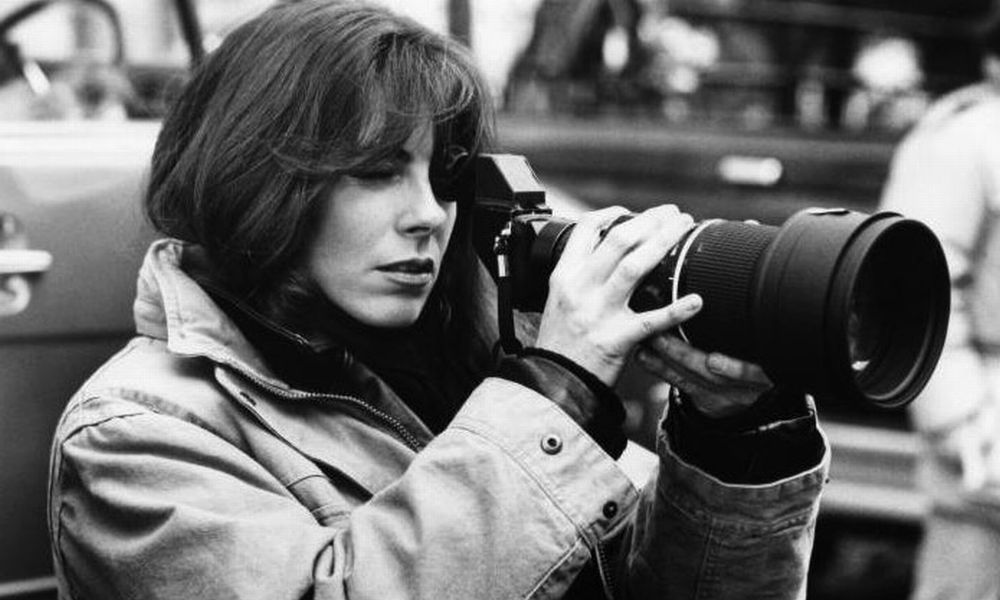
"An art-house-oriented filmmaker who seems to revel in genres conventionally understood as both 'masculine' and artless - whether road movie, teen-pic, horror, cop thriller, action, buddy yarns or science fiction - Bigelow has attracted both curiosity and, more recently, sustained critical interest." - Yvonne Tasker (Fifty Contemporary Filmmakers, 2002)
Kathryn Bigelow
Director / Screenwriter / Producer
(1951- ) Born November 27, San Carlos, California, USA
Top 250 Directors / 21st Century's Top 100 Directors
(1951- ) Born November 27, San Carlos, California, USA
Top 250 Directors / 21st Century's Top 100 Directors
Key Production Country: USA
Key Genres: Action Thriller, Action, War, Horror, Police Detective Film, Science Fiction
Key Collaborators: Mark Boal (Screenwriter/Producer), Howard E. Smith (Editor), Ralph Fiennes (Leading Actor), Eric Red (Screenwriter), Steven-Charles Jaffe (Producer), Megan Ellison (Producer), Barry Ackroyd (Cinematographer), William Goldenberg (Editor), Jeremy Hindle (Production Designer), James LeGros (Character Actor)
Key Genres: Action Thriller, Action, War, Horror, Police Detective Film, Science Fiction
Key Collaborators: Mark Boal (Screenwriter/Producer), Howard E. Smith (Editor), Ralph Fiennes (Leading Actor), Eric Red (Screenwriter), Steven-Charles Jaffe (Producer), Megan Ellison (Producer), Barry Ackroyd (Cinematographer), William Goldenberg (Editor), Jeremy Hindle (Production Designer), James LeGros (Character Actor)
"Almost single-handed, Kathryn Bigelow has lastingly scotched the assumption that the terms ‘‘woman director’’ and ‘‘action movie’’ are somehow incompatible. So far, no other female director has shown herself so adept at handling the intricate ballets of stylised violence that constitute the modern Hollywood action genre… Her films, though vigorously paced and tinged with ironic humour, are shot through with a dark romanticism; and by delving deeper into formal, psychological, and thematic patterns than mainstream Hollywood generally cares to, they lift their material some way towards the condition of arthouse fare. Though Bigelow avowedly aims at a mass audience, the moral and aesthetic complexity of her films has kept her a slightly marginal figure in the industry." - Philip Kemp (International Dictionary of Films and Filmmakers, 2000)
"Kathryn Bigelow is one of the few women directors working successfully in Hollywood today. She is certainly exceptional in that much of her work has been made within the traditionally male-dominated arena of big-budget action movies, a choice of field that has earned her a reputation as quite a maverick. However, Bigelow's films often reflect a different approach to these genres because she consistently explores themes of violence, voyeurism and sexual politics; ultimately, she seems to be concerned with questioning the very nature of the boundaries between particular genres." - Hannah Ransley (Contemporary North American Film Directors, 2002)
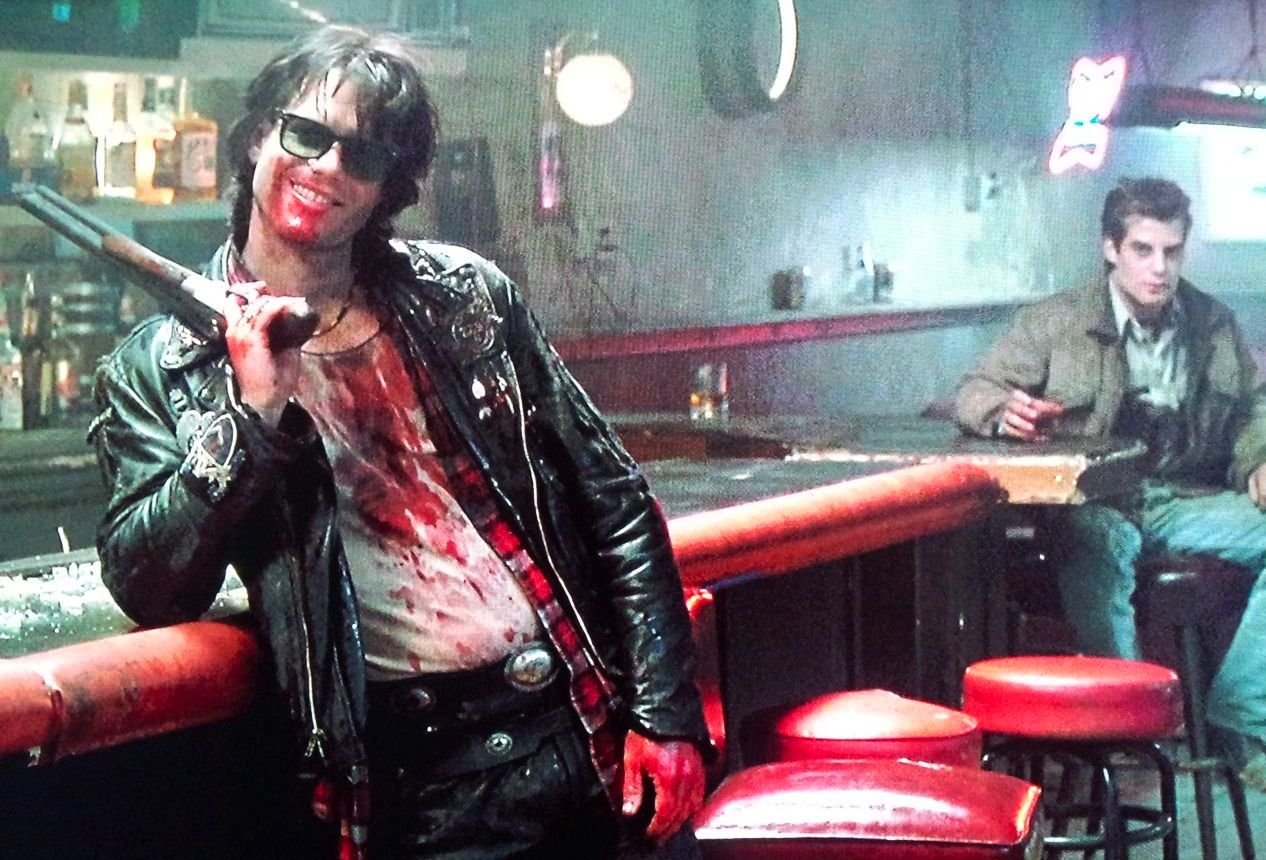
Near Dark (1987)
"At the rate she makes films, this American director's career list is unlikely to be counted on more than the fingers of two hands. What films she has made have usually proved noisy, nasty and watchable: there are few smiles in a Bigelow movie." - David Quinlan (Quinlan's Illustrated Guide to Film Directors, 1999)
"Bigelow has been quoted as saying that "action cinema is pure cinema." To which one must add that it may only expose the dangers of trying to do without character or good sense. Why does the cinema need to be so pure? Has anyone ever observed that state in its manufacture? Since Strange Days, she has made two more films that struggled to get a proper release." - David Thomson (The New Biographical Dictionary of Film, 2002)
"Kathryn Bigelow has achieved the remarkable feat of becoming one of Hollywood's few successful women directors while avoiding traditional women's fare. She made her mark with the biker movie The Loveless (1981) and Near Dark (1987), a contemporary vampire movie set in the American West." - The Movie Book, 1999
"Kathryn Bigelow's robust films inhabit the traditionally male preserve of the violent action movie, which she simultaneously celebrates and subverts with strong female characters who are ready participants in, rather than victims of, physical conflict. Often, like the work of former husband James Cameron, her films fall prey to sensationalist excess and simplistic sociological fantasy. All the same, her lean, taut imagery (she was formerly an art student, and her dynamic style was already to be found in the biker-movie The Loveless) and an almost fetishistic fascination with weaponry and costume mark her out as an idiosyncratic if erratic talent." - Geoff Andrew (The Director's Vision, 1999)
Selected Filmography
Loading filmography...
Kathryn Bigelow / Favourite Films
Lawrence of Arabia (1962) David Lean, Mean Streets (1973) Martin Scorsese, The Terminator (1984) James Cameron, The Wild Bunch (1969) Sam Peckinpah.
Source: Rotten Tomatoes (2009)
Lawrence of Arabia (1962) David Lean, Mean Streets (1973) Martin Scorsese, The Terminator (1984) James Cameron, The Wild Bunch (1969) Sam Peckinpah.
Source: Rotten Tomatoes (2009)
Kathryn Bigelow / Fan Club
Nick James, Richard Corliss, Catharine Des Forges, Therese Grisham, Alison Willmore, Peter Keough, Stephanie Zacharek, J. Hoberman, Sophie Brown, Rafer Guzman, Jeffrey M. Anderson, Ed Gonzalez.
Nick James, Richard Corliss, Catharine Des Forges, Therese Grisham, Alison Willmore, Peter Keough, Stephanie Zacharek, J. Hoberman, Sophie Brown, Rafer Guzman, Jeffrey M. Anderson, Ed Gonzalez.
"Fan Club"
These film critics/filmmakers have, on multiple occasions, selected this director’s work within film ballots/lists that they have submitted.
These film critics/filmmakers have, on multiple occasions, selected this director’s work within film ballots/lists that they have submitted.