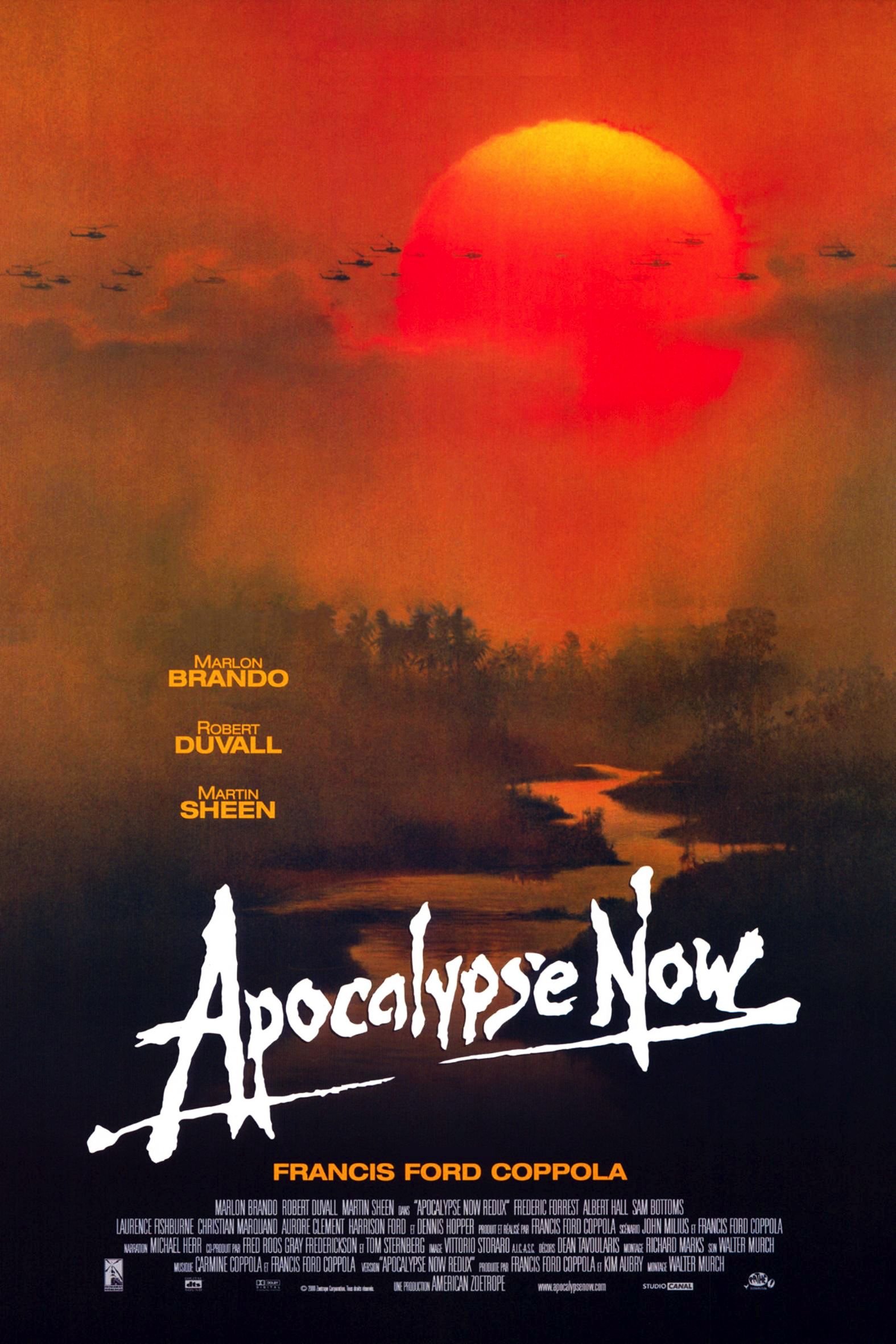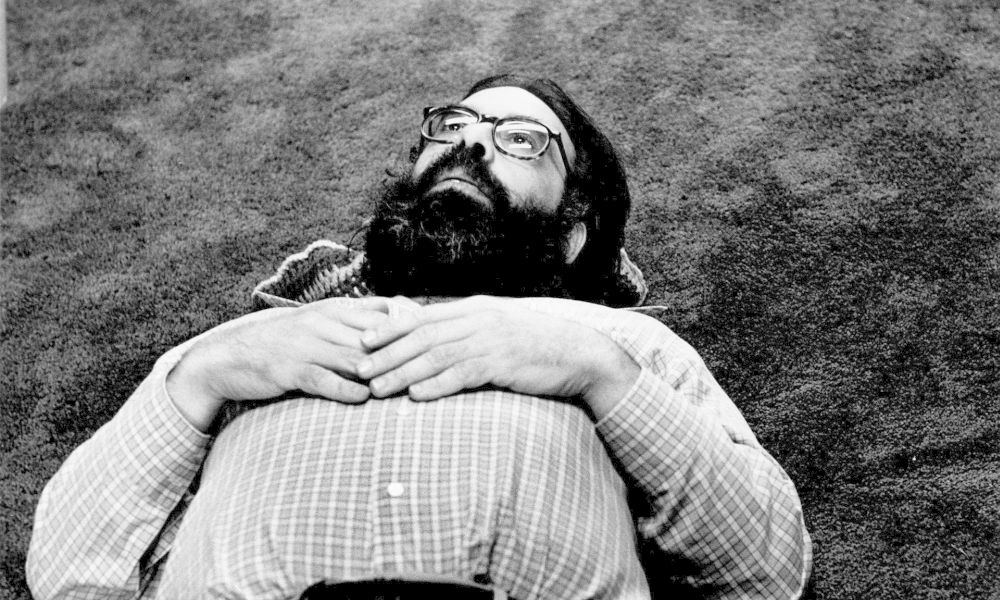
"Francis Ford Coppola towered over American cinema in the 1970s. One of the last of its visionary creators, Coppola stands at the heart of that efflorescence of American auteur cinema which became known as New Hollywood." - Richard Armstrong (The Rough Guide to Film, 2007)
Francis Ford Coppola
Key Production Country: USA
Key Genres: Drama, Gangster Film, Crime, Family Drama, Crime Drama, Horror, Coming-of-Age, Anti-War Film, Teen Movie, Comedy, Romance, Gothic Film
Key Collaborators: Dean Tavoularis (Production Designer), Barry Malkin (Editor), Robert Duvall (Leading Character Actor), Carmine Coppola (Composer), James Caan (Leading Character Actor), Al Pacino (Leading Actor), Frederic Forrest (Leading Actor), Mario Puzo (Screenwriter), Fred Roos (Producer), Fred Fuchs (Producer), Gordon Willis (Cinematographer), Walter Murch (Editor)
Key Genres: Drama, Gangster Film, Crime, Family Drama, Crime Drama, Horror, Coming-of-Age, Anti-War Film, Teen Movie, Comedy, Romance, Gothic Film
Key Collaborators: Dean Tavoularis (Production Designer), Barry Malkin (Editor), Robert Duvall (Leading Character Actor), Carmine Coppola (Composer), James Caan (Leading Character Actor), Al Pacino (Leading Actor), Frederic Forrest (Leading Actor), Mario Puzo (Screenwriter), Fred Roos (Producer), Fred Fuchs (Producer), Gordon Willis (Cinematographer), Walter Murch (Editor)
"Artists and athletes enjoy streaks of brilliance. For Francis Ford Coppola, the streak starts in 1970 and continues through 1979. Before that and afterward, there are memorable moments, but in this decade he directed impressive, award-winning pictures with unprecedented frequency." - Garrett Chaffin-Quiray (501 Movie Directors, 2007)
"Coppola restlessly veers between commercial and personal projects, social criticism and a celebration of ritual tradition; as an artist he is as divided a personality as many of his creations. That's why, perhaps, his finest work is ironic and ambivalent: the cross-cutting between baptism and bloody murder in The Godfather, the conflict between professionalism and ethics in The Conversation, the idea that war can be horrific and exciting in Apocalypse Now. Sadly, his recent work is a pale shadow of those audacious, ambitious movies." - Geoff Andrew (The Director's Vision, 1999)
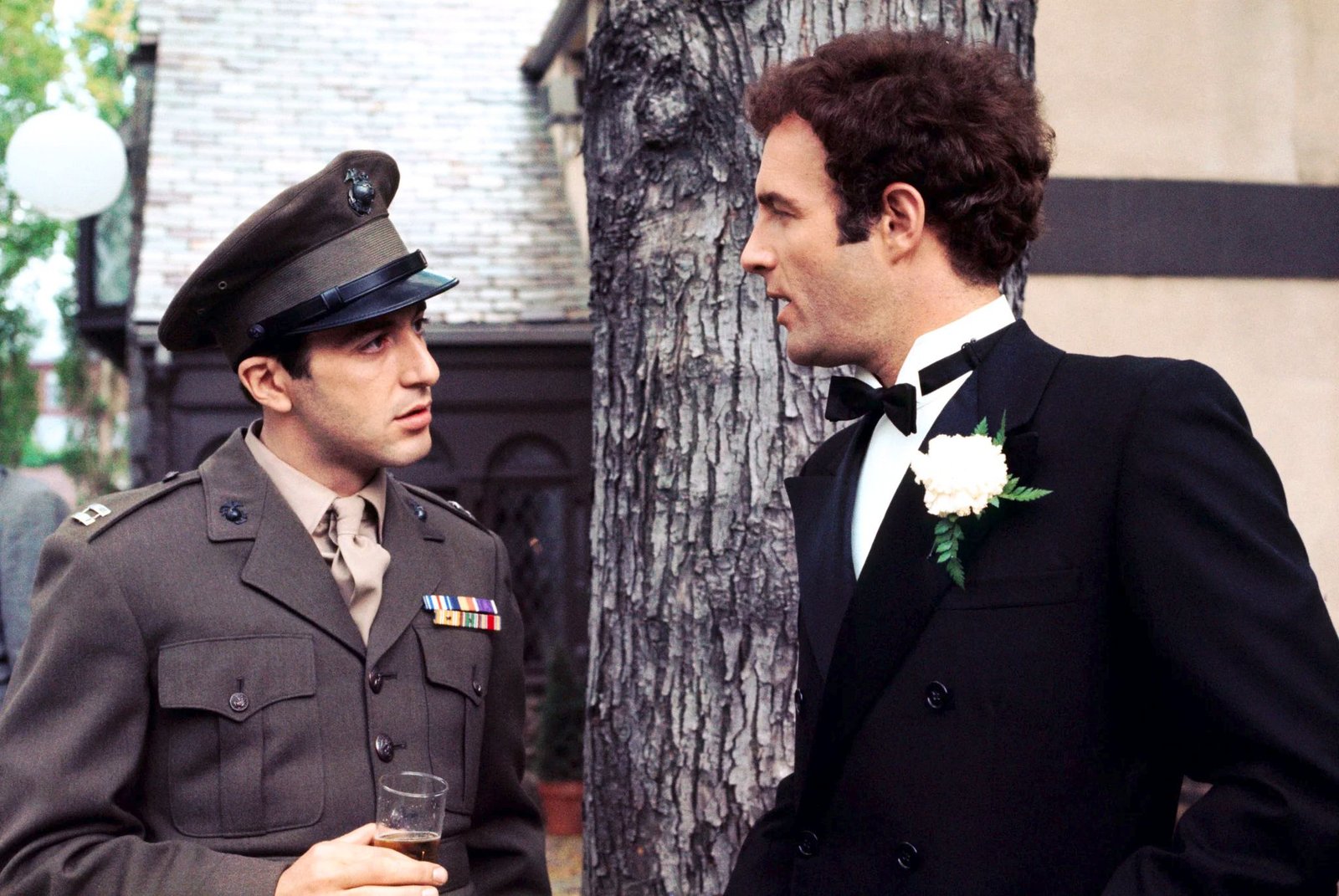
The Godfather (1972)
"His reputation has fallen a good deal as a filmmaker in the years since Apocalypse Now. But no American career has had such endless, entertaining turmoil, or says as much about making movies in America now. No one retains so many jubilant traits of the kid moviemaker, or has inspired darker comments." - David Thomson (The New Biographical Dictionary of Film, 2002)
"One of America's most erratic, energetic and controversial filmmakers, Francis Ford Coppola enjoyed stunning triumphs and endured monumental setbacks before resurrecting himself, Phoenix-like, to begin the process all over again. Known primarily for his successful Godfather trilogy, Coppola was the most celebrated of the Young Turks - a group of filmmakers who emerged in the early 1970s that included George Lucas, Steven Spielberg, Martin Scorsese, Brian De Palma and William Friedkin. Unbridled by his ambition and enthusiasm, and perhaps obsessive to the point of being manic, Coppola infused a fervent creative energy into his early work, culminating in Apocalypse Now (1979), a journey into his own heart of darkness that irrevocably altered his career and may have even caused permanent psychological damage." - Turner Classic Movies
"Francis Coppola is one creative person who has continued to exercise his considerable talent throughout his career. Admittedly, he has had his occasional failure, such as the off-center teen movie, Rumble Fish (1983). But the majority of the films he has directed over the years have demonstrated that he is one of the most gifted directors to have come across the Hollywood horizon since Stanley Kubrick." - Gene D. Phillips (International Dictionary of Films and Filmmakers, 1991)
"Coppola is fascinated by families – their members, structures, dynamics, rules and rituals. These families come in all shapes and sizes: those created by birth (The Godfather) and social forces (The Outsiders), as well as those springing from shared goals (Tucker: The Man and His Dream) and random circumstance (Apocalypse Now). Coppola is intensely interested in how people are able (or unable) to live and work together." - Brian Dauth (Senses of Cinema, 2006)
"In a career that has been a rollercoaster affair, not only has Francis Ford Coppola always been torn between two extremes of film-making - the massive epic form, and the small, intimate film - but he has fluctuated between mammoth and modest hits as well as failures." - Ronald Bergan (Film - Eyewitness Companions, 2006)
"Over the years Francis Coppola has teetered between success and disaster, often rising like a phoenix from the ashes every time his career seems doomed. He remains one of America's most creative, if erratic, filmmakers, his place in motion picture history secured by The Godfather films." - (The MacMillan International Film Encyclopedia, 1994)
"Coppola is an enigma - a man of extraordinary energy and varied passions whose generous encouragement of others, twinned with his magnificent work on the Godfather trilogy (1972-90) and Apocalypse Now (1979), should be enough to put him on a par with a John Ford, a Nicholas Ray, or a Frank Capra." - Mario Reading (The Movie Companion, 2006)
"Coppola deals with issues of contemporary America: the alienation of the young in You're a Big Boy Now (67), the disenfranchised woman in The Rain People (69), the invasion of privacy in The Conversation (74), organized crime in The Godfather (72), and the Vietnam War in Apocalypse Now (78)." - William R. Meyer (The Film Buff's Catalog, 1978)
“Of all the American ‘wonder-boys’ of the post-1960 period, Coppola consolidated his position best, and could be said to be the senior citizen of the movement.” - David Quinlan (Quinlan's Film Directors, 1999)
"The essence of cinema is editing. It's the combination of what can be extraordinary images of people during emotional moments, or images in a general sense, put together in a kind of alchemy." - Francis Ford Coppola
"You have to really be courageous about your instincts and your ideas. Otherwise you'll just knuckle under, and things that might have been memorable will be lost." - Francis Ford Coppola
Selected Filmography
Loading filmography...
Francis Ford Coppola / Favourite Films
The Apartment (1960) Billy Wilder, Ashes and Diamonds (1958) Andrzej Wajda, The Bad Sleep Well (1960) Akira Kurosawa, The Best Years of Our Lives (1946) William Wyler, The King of Comedy (1983) Martin Scorsese, Raging Bull (1980) Martin Scorsese, Singin' in the Rain (1952) Stanley Donen & Gene Kelly, Sunrise (1927) F.W. Murnau, I Vitelloni (1953) Federico Fellini, Yojimbo (1961) Akira Kurosawa.
Source: Sight & Sound (2012)
The Apartment (1960) Billy Wilder, Ashes and Diamonds (1958) Andrzej Wajda, The Bad Sleep Well (1960) Akira Kurosawa, The Best Years of Our Lives (1946) William Wyler, The King of Comedy (1983) Martin Scorsese, Raging Bull (1980) Martin Scorsese, Singin' in the Rain (1952) Stanley Donen & Gene Kelly, Sunrise (1927) F.W. Murnau, I Vitelloni (1953) Federico Fellini, Yojimbo (1961) Akira Kurosawa.
Source: Sight & Sound (2012)
Francis Ford Coppola / Fan Club
José Luis Garci, Pablo Villaça, Mark Dujsik, Apichatpong Weerasethakul, John Woo, Michael Wilmington, Camille Paglia, Nigel Andrews, Carlos Diegues, Fernando G. Varea, Kenneth Turan, Manohla Dargis.
José Luis Garci, Pablo Villaça, Mark Dujsik, Apichatpong Weerasethakul, John Woo, Michael Wilmington, Camille Paglia, Nigel Andrews, Carlos Diegues, Fernando G. Varea, Kenneth Turan, Manohla Dargis.
"Fan Club"
These film critics/filmmakers have, on multiple occasions, selected this director’s work within film ballots/lists that they have submitted.
These film critics/filmmakers have, on multiple occasions, selected this director’s work within film ballots/lists that they have submitted.