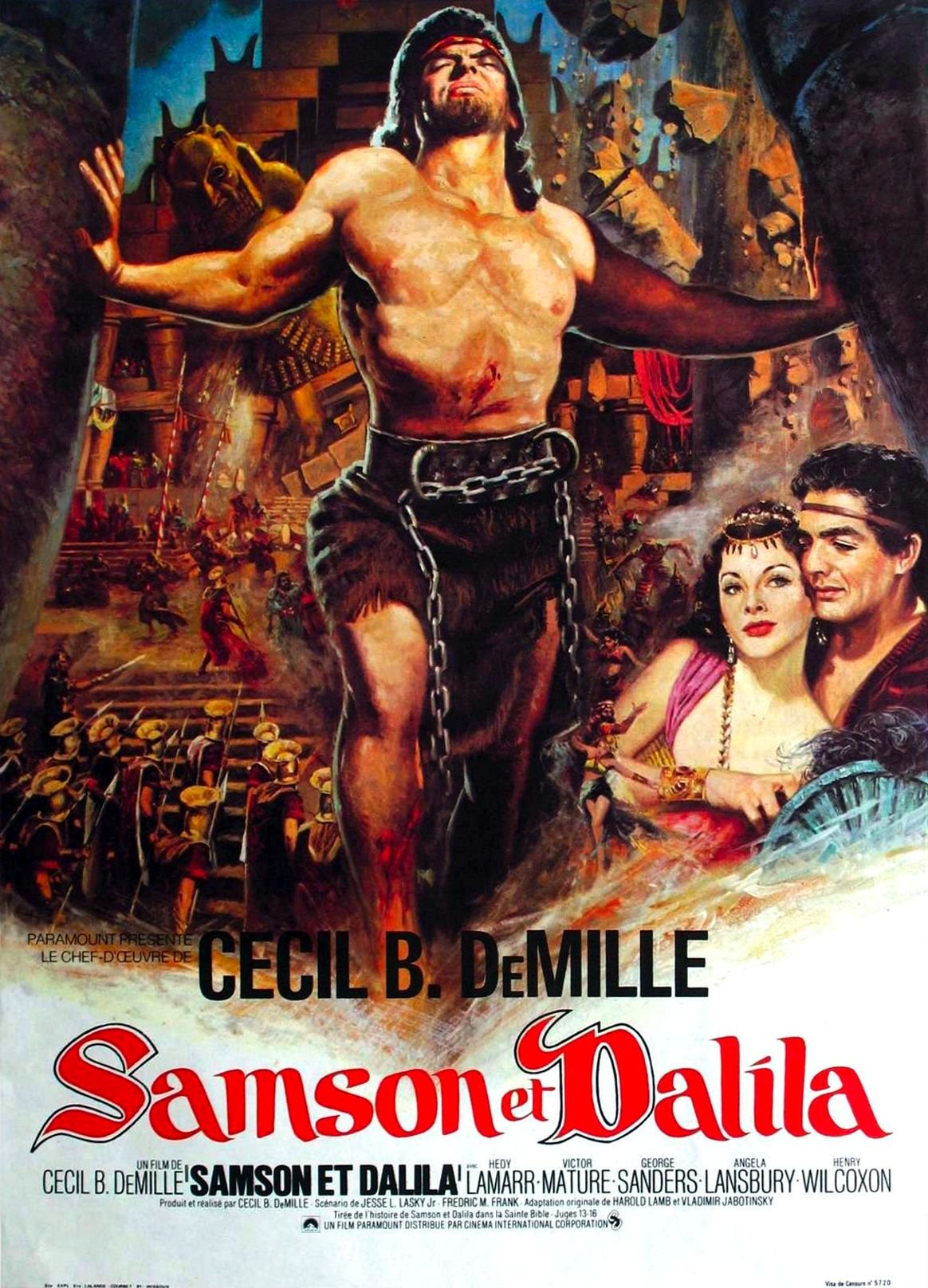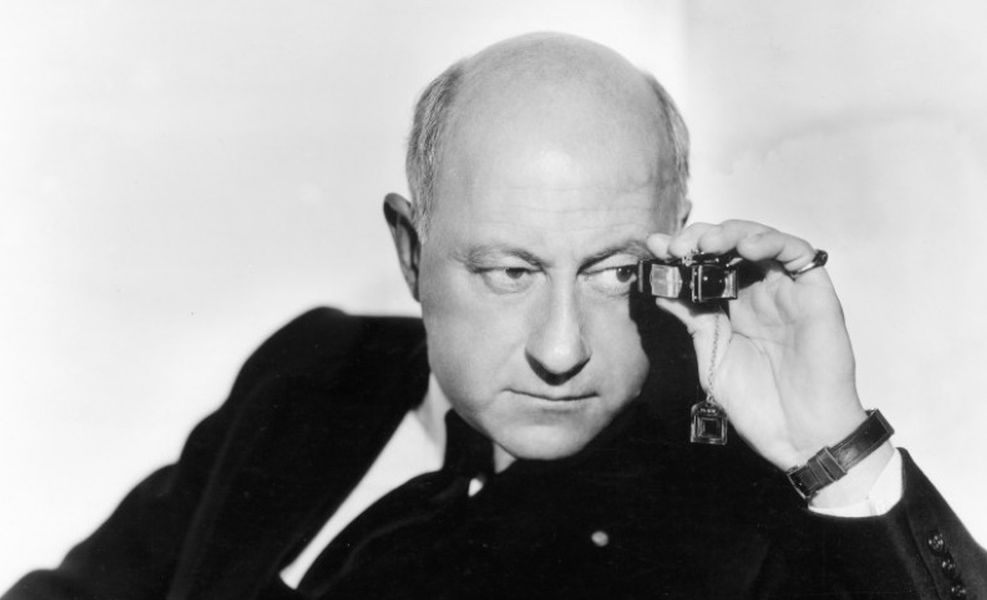
"From the moment he began identifying and feeding the dreams and aspirations of the 1920s, DeMille made himself a being of legend, embodying for all time - with his megaphone, breeches and riding boots, his extravagance and autocracy and sense of the grandiose - the mythical image of the Hollywood film director." - David Robinson (The International Encyclopedia of Film, 1972)
Cecil B. DeMille
Director / Producer / Editor / Screenwriter
(1881-1959) Born August 12, Ashfield, Massachusetts, USA
(1881-1959) Born August 12, Ashfield, Massachusetts, USA
Key Production Country: USA
Key Genres: Drama, Epic, Religious Epic, Action, Romance, Melodrama, Romantic Adventure, Western, Adventure, Hagiography, Epic Western, Historical Film
Key Collaborators: Anne Bauchens (Editor), Jeanie Macpherson (Screenwriter), Hans Dreier (Production Designer), Victor Milner (Cinematographer), Roland Anderson (Production Designer), Jesse Lasky Jr. (Screenwriter), Alvin Wyckoff (Cinematographer), Victor Young (Composer), Mitchell Leisen (Production Designer), Henry Wilcoxon (Character Actor), Peverell Marley (Cinematographer), Clarence Burton (Character Actor)
Key Genres: Drama, Epic, Religious Epic, Action, Romance, Melodrama, Romantic Adventure, Western, Adventure, Hagiography, Epic Western, Historical Film
Key Collaborators: Anne Bauchens (Editor), Jeanie Macpherson (Screenwriter), Hans Dreier (Production Designer), Victor Milner (Cinematographer), Roland Anderson (Production Designer), Jesse Lasky Jr. (Screenwriter), Alvin Wyckoff (Cinematographer), Victor Young (Composer), Mitchell Leisen (Production Designer), Henry Wilcoxon (Character Actor), Peverell Marley (Cinematographer), Clarence Burton (Character Actor)
"For much of his forty-year career, the public and the critics associated Cecil B. DeMille with a single kind of film, the epic. He certainly made a great many of them: The Sign of the Cross, The Crusades, King of Kings, two versions of The Ten Commandments, The Greatest Show on Earth, and others. As a result, DeMille became a symbol of Hollywood during its 'Golden Age.' He represented that which was larger than life, often too elaborate, but always entertaining. By having such a strong public personality, however, DeMille came to be neglected as a director, even though many of his films—not just the epics—stand out as extraordinary." - Eric Smoodin, International Dictionary of Film and Filmmakers
"DeMille's movies are barnstormers, rooted in Victorian theatre, shamelessly stereotyped and sentimental, but eagerly courting twentieth-century permissiveness, if only solemnly to condemn it. The movies are simple, raw, pious, and jingoistic; but though DeMille was commercially cynical, his conviction in the human relevance of his rubbish is undisturbed, and the energy of his imagination seldom flags." - David Thomson (The New Biographical Dictionary of Film, 2002)
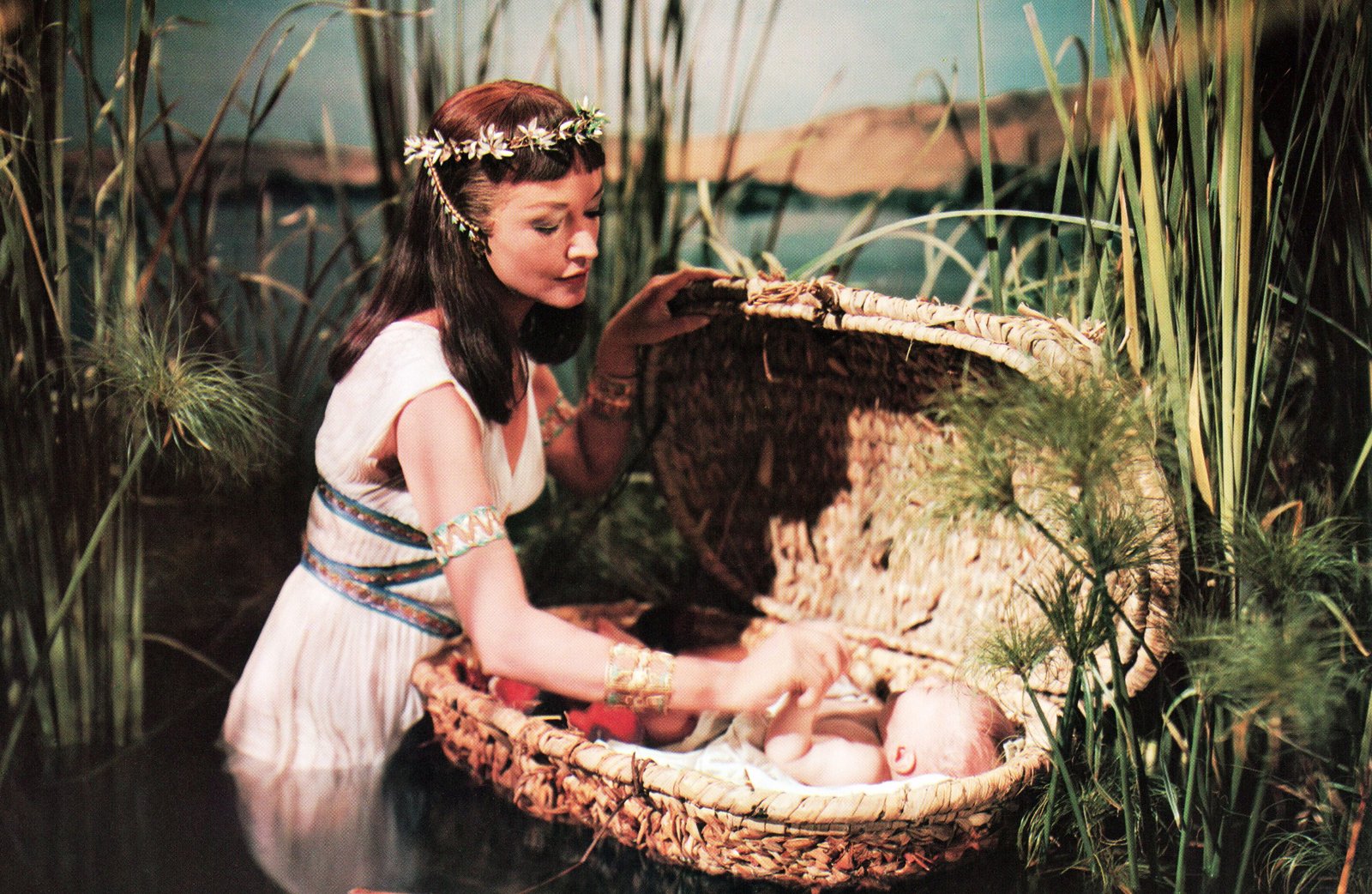
The Ten Commandments (1956)
"DeMille sold the public morality and religion under the brown paper wrappings of sex and sin. Although he made dozens of films, his most famous remain the Biblical and historical spectaculars, with their casts of thousands, and their magnificent costumes, sets and effects. DeMille spared no expense, expected 110 percent from cast and crew alike and believed passionately in the films he made. Although the butt of many jokes, his films made millions at the box-offices of the world." - David Quinlan (Quinlan's Film Directors, 1999)
"Legendary producer-director Cecil B. DeMille, affectionately known as C.B., was a seminal cofounder of Hollywood and a progenitor of Paramount studio who became a mega-star of the American cinema during its Golden Age. He quickly became the archetypal image of a movie director; especially when wearing his trademark puttees, barking orders through a megaphone, and having an attentive chair boy two lock-steps behind his every move. This iconic but frequently unsung auteur helped turned an obscure Californian orange grove into the movie centre of the world and made “Hollywood” synonymous with success." - Anton Karl Kozlovic (Senses of Cinema, 2013)
"Forget the fact that he made, in his early years, some relatively sophisticated marital comedies and, later, decent if unremarkable westerns; think of DeMille, and the epic springs to mind.... Most immediately striking about DeMille's historical extravaganzas is not the pretension to spiritual probity but the gleeful depiction of the corruption and lascivious decadence they purport to condemn... Excess, behavioural and visual, is the keynote to his best-known work; the lurid pageantry is often absurdly watchable, but the historical and moral simplifications, coupled with wooden acting, frequently make for dramatic tedium." - Geoff Andrew (The Director's Vision, 1999)
"He directed a wide range of pictures, including social comedies starring Gloria Swanson, and biblical epics such as The Ten Commandments and The King of Kings. An astute showman, he continued to produce and direct a large number of highly successful epics from the Twenties until the mid-Fifties, staying with his old company, Paramount, up to the end. Although he never received an Oscar for directing, he was awarded a special Oscar in 1949 and the Irving Thalberg Award in 1952." - The Illustrated Who's Who of the Cinema, 1983
“Over the years, the critical pendulum on Cecil Blount DeMille has swung both ways. Although he is generally regarded as the screen's master of the historical epic and religious spectacle, the many flaws and shortcomings of his films have often been enumerated: the grade-school dialogue, the simplistic characterizations, the uneasy combination of humble piety and leering sex, and, above all, DeMille's stubborn refusal to acknowledge changing film trends. On the other hand, he has been hailed as a born showman and consummate storyteller whose movies are well-paced and seldom boring.” - Ted Sennett (Great Movie Directors, 1986)
“DeMille made more than 200 films during his 60-year career in Hollywood, many of them enormously popular. Audiences relished his adept combination of sex, violence, drama and religion. Although critics often dismiss the merit of his films, DeMille was an acknowledged giant of the film industry.” - The Movie Makers, 1974
Selected Filmography
Loading filmography...
Cecil B. DeMille / Favourite Films
Ben-Hur (1926) Fred Niblo, The Big Parade (1925) King Vidor, The Birth of a Nation D.W. Griffith, Cabiria (1914) Giovanni Pastrone, Going My Way (1944) Leo McCarey, Gone with the Wind (1939) Victor Fleming, The King of Kings Cecil B. DeMille, Samson and Delilah (1949) Cecil B. DeMille, The Sign of the Cross (1932) Cecil B. DeMille, The Ten Commandments (1923) Cecil B. DeMille.
Source: Cinematheque Belgique (1952)
Ben-Hur (1926) Fred Niblo, The Big Parade (1925) King Vidor, The Birth of a Nation D.W. Griffith, Cabiria (1914) Giovanni Pastrone, Going My Way (1944) Leo McCarey, Gone with the Wind (1939) Victor Fleming, The King of Kings Cecil B. DeMille, Samson and Delilah (1949) Cecil B. DeMille, The Sign of the Cross (1932) Cecil B. DeMille, The Ten Commandments (1923) Cecil B. DeMille.
Source: Cinematheque Belgique (1952)
Cecil B. DeMille / Fan Club
José Luis Guarner, Cecil B. DeMille, Luc Moullet, Martin Scorsese, Michel Mourlet, Camille Paglia, Miguel Marías, Chris Chang, Manuel Gutiérrez Aragon, Gil Parrondo, Ángel González, Alfred Hitchcock.
José Luis Guarner, Cecil B. DeMille, Luc Moullet, Martin Scorsese, Michel Mourlet, Camille Paglia, Miguel Marías, Chris Chang, Manuel Gutiérrez Aragon, Gil Parrondo, Ángel González, Alfred Hitchcock.
"Fan Club"
These film critics/filmmakers have, on multiple occasions, selected this director’s work within film ballots/lists that they have submitted.
These film critics/filmmakers have, on multiple occasions, selected this director’s work within film ballots/lists that they have submitted.