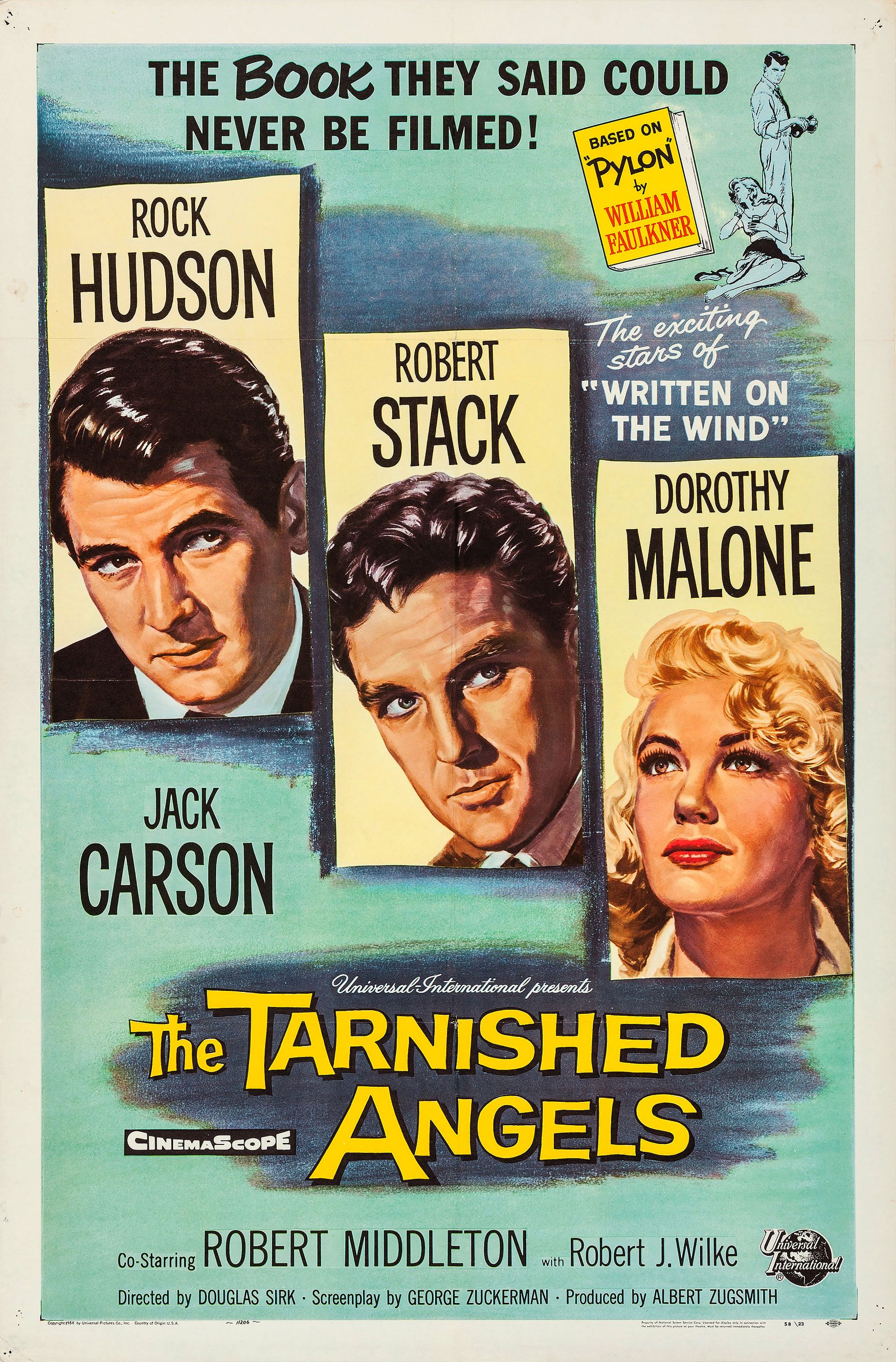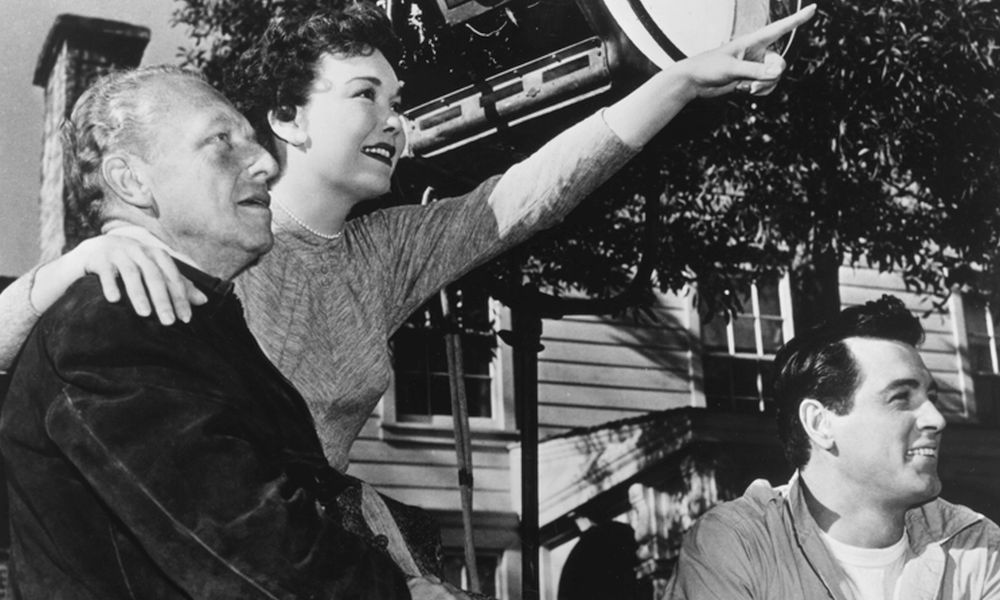
"His strong visual sense and facility with melodrama led to a highly successful career as a director of 'women's weepies'… Dismissed as florid and novelettish by contemporary critics - though very popular at the box-office - Sirk's films can now be seen as impressive and incisive examinations of emotional relationships in American society." - The Illustrated Who's Who of Cinema, 1983
Douglas Sirk
Key Production Countries: USA, Germany
Key Genres: Drama, Melodrama, Romance, Adventure, Comedy, Film Noir, War Drama, Family Drama, Mystery, Romantic Drama, Psychological Thriller, Biography
Key Collaborators: Alexander Golitzen (Production Designer), Frank Skinner (Composer), Ross Hunter (Producer), Russell Metty (Cinematographer), Rock Hudson (Leading Actor), Russell Schoengarth (Editor), Bernard Herzbrun (Production Designer), Milton Carruth (Editor), Joseph Gershenson (Composer), Emrich Nicholson (Production Designer), George Sanders (Leading Actor), Barbara Rush (Leading Actress)
Key Genres: Drama, Melodrama, Romance, Adventure, Comedy, Film Noir, War Drama, Family Drama, Mystery, Romantic Drama, Psychological Thriller, Biography
Key Collaborators: Alexander Golitzen (Production Designer), Frank Skinner (Composer), Ross Hunter (Producer), Russell Metty (Cinematographer), Rock Hudson (Leading Actor), Russell Schoengarth (Editor), Bernard Herzbrun (Production Designer), Milton Carruth (Editor), Joseph Gershenson (Composer), Emrich Nicholson (Production Designer), George Sanders (Leading Actor), Barbara Rush (Leading Actress)
"No other director has been more closely associated with the concept of melodrama in cinema than Douglas Sirk… While popular with audiences, Sirk’s films were often condemned by contemporary film critics as examples of the sensationalism and sentimentality of popular cinema. However, in France, the critics of the influential Cahiers du Cinèma, notably François Truffaut and Jean-Luc Godard, praised Sirk’s distinctive visual style. In the early 1970s a new generation of film scholars, notably Thomas Elsaesser, Paul Willemen, Geoffrey Nowell-Smith, and Fred Camper, ‘‘rediscovered’’ Sirk’s films, hailing them as supreme examples of a subversive critique of postwar American society expressed through stylized mise-en-scène drawing on irony and Brechtian alienating devices. Sirk’s work has influenced many subsequent filmmakers including Rainer Werner Fassbinder, Martin Scorsese, John Waters, Pedro Almodóvar, Jonathan Demme, and Todd Haynes." - John Mercer (Schirmer Encyclopedia of Film, 2007)
"Most of the projects assigned to him were unpromising in content and miniscule in budget. He was often forced to contend with ridiculous scripts, ranging in genre from thriller to maudlin soap operas. That he managed to overcome the handicap and end up with a good number of thoroughly enjoyable films is a tribute to his personal taste and the formal excellence of his visual style." - The MacMillan International Film Encyclopedia, 1994

Written on the Wind (1956)
"Time, if nothing else, will vindicate Douglas Sirk as it has already vindicated Josef von Sternberg. Formal excellence and visual wit are seldom as appreciated at first glance as are the topical sensations of the hour. One big obstacle to an appreciation of his oeuvre is an inbred prejudice to what Raymond Durgnat has called the genre of the female weepies as opposed to the male weepies." - Andrew Sarris (The American Cinema, 1968)
"Douglas Sirk is so synonymous with 1950s melodrama that it is easy to forget that he made dozens of films across Germany, the Netherlands and the US before his brilliant run of so-called ‘women’s pictures’, from All I Desire (1953) to Imitation of Life (1959). Although critically derided, many of these melodramas were huge hits at the box office, making Sirk’s decision to retire from filmmaking so early all the more surprising. In 1967 the French journal Cahiers du cinéma reappraised Sirk’s work, and he is now seen as one of cinema’s great social critics. Cunningly, he chose melodramas (seen then as soapy concoctions for female audiences) as vehicles for his critiques, subtly dissecting prejudice and avarice under a seemingly innocuous surface… But while his later melodramas are the most celebrated, many of his earlier works are terrific in their own right, and show the roots of an interest in the themes that would be developed more fully in his final few masterpieces." - Alex Davidson (BFI, 2016)
"Though the erudite Sirk worked in the intellectually disreputable realm of the melodrama, his alertness to the injustices underlying the American Dream and his commitment to underdog characters made for heart-rending, thought-provoking cinema." - Geoff Andrew (The Director's Vision, 1999)
"Celebrated by the feminist and Marxist critics of the 1970s such as Laura Mulvey and the late great Thomas Elsaesser, and championed by queer directors like Rainer Werner Fassbinder, Pedro Almodóvar and Todd Haynes, his subversive command of the various forms of melodrama and other genres remains celebrated today. The seething worlds of Sirk’s creations are strangely fascinating, endlessly entertaining and provide extraordinary portraits of particular societies, character types and moments in time." - ACMI, 2022
"Stylish melodramas form the core of Sirk's reputation, but he lensed suspense films, costume dramas, comedies, and even Westerns with flair." - William R. Meyer (The Film Buff's Catalog, 1978)
"Douglas Sirk, whose Hollywood career ran from 1943 to 1959, may be the most intellectual filmmaker ever to work in Hollywood (at least, he’d run Terrence Malick, who translated Heidegger, a close second), and it shows in his films." - Richard Brody (The New Yorker, 2015)
"So slowly in my mind formed the idea of melodrama, a form I found to perfection in American pictures. They were naive, they were that something completely different. They were completely Art-less." - Douglas Sirk
"If I can say one thing for my pictures, it is a certain craftsmanship. A thought which has gone into every angle. There is nothing there without an optical reason." - Douglas Sirk
Selected Filmography
Loading filmography...
GF Greatest Films ranking (★ Top 1000 ● Top 2500)
T TSPDT N 1,000 Noir Films
R Jonathan Rosenbaum S Martin Scorsese
T TSPDT N 1,000 Noir Films
R Jonathan Rosenbaum S Martin Scorsese
Douglas Sirk / Fan Club
Richard Brody, Miguel Marías, Andrew Sarris, Jean-Loup Bourget, Allison Anders, José Luis Guarner, David Sterritt, Ed Gonzalez, Martin Scorsese, Laura Mulvey, Richard Kwietniowski, Nenad Polimac.
Richard Brody, Miguel Marías, Andrew Sarris, Jean-Loup Bourget, Allison Anders, José Luis Guarner, David Sterritt, Ed Gonzalez, Martin Scorsese, Laura Mulvey, Richard Kwietniowski, Nenad Polimac.
"Fan Club"
These film critics/filmmakers have, on multiple occasions, selected this director’s work within film ballots/lists that they have submitted.
These film critics/filmmakers have, on multiple occasions, selected this director’s work within film ballots/lists that they have submitted.