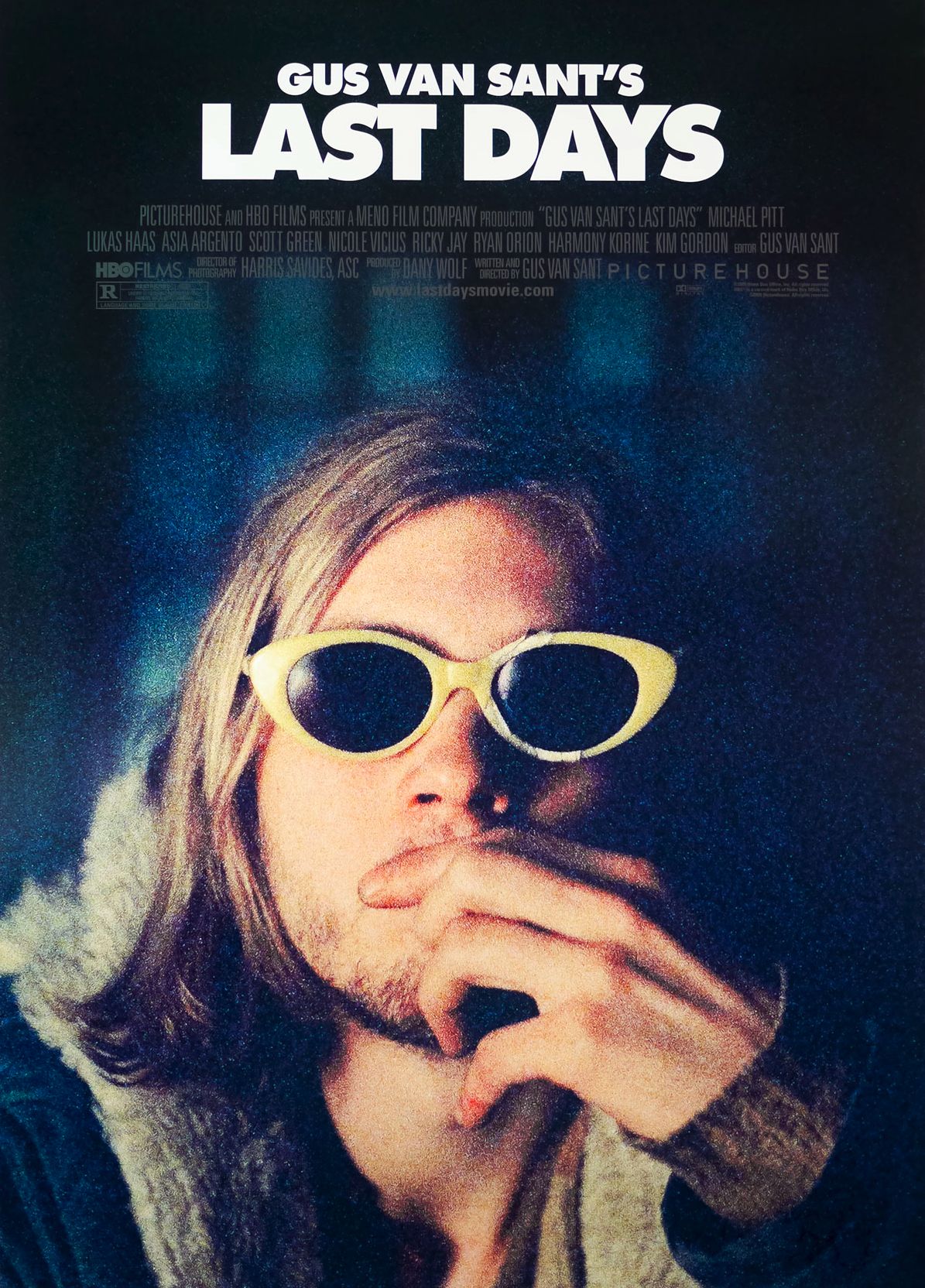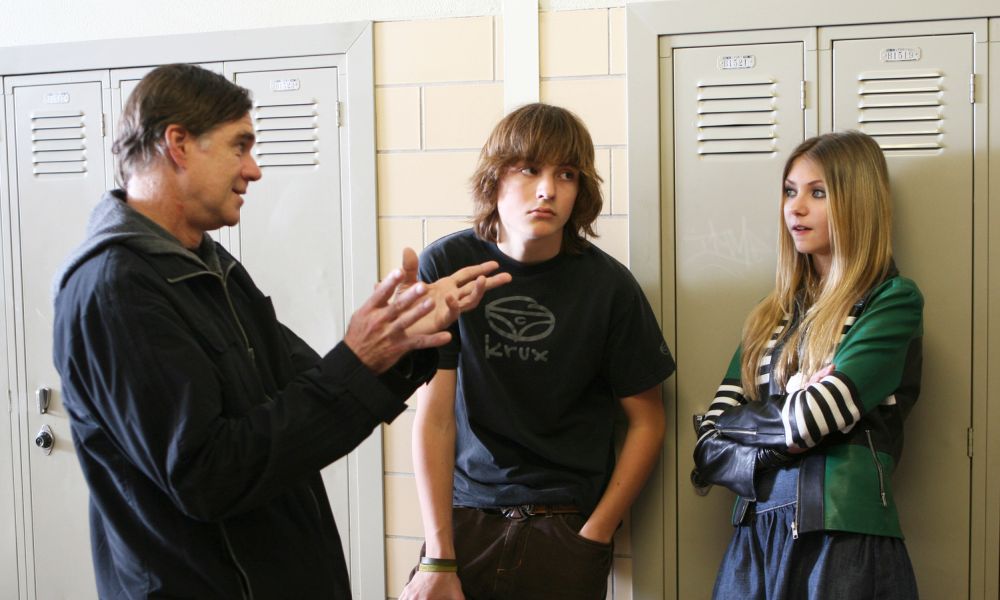
"A pioneer of American independent film and New Queer Cinema in the 1990s, the Portland, Oregon-based Van Sant made his name with a run of gritty underbelly dramas featuring provocative outsider male protagonists." - Andrew Bailey (Cinema Now, 2007)
Gus Van Sant
Director / Screenwriter / Editor / Producer
(1952- ) Born July 24, Louisville, Kentucky, USA
Top 250 Directors / 21st Century's Top 100 Directors
(1952- ) Born July 24, Louisville, Kentucky, USA
Top 250 Directors / 21st Century's Top 100 Directors
Key Production Country: USA
Key Genres: Drama, Psychological Drama, Coming-of-Age, Gay & Lesbian Films, Road Movie, Avant-garde/Experimental, Romantic Drama, Buddy Film, Film à Clef, Comedy
Key Collaborators: Harris Savides (Cinematographer), Curtiss Clayton (Editor), Danny Elfman (Composer), Dany Wolf (Producer), Eric Alan Edwards (Cinematographer), John J. Campbell (Cinematographer), Casey Affleck (Leading Character Actor), Missy Stewart (Production Designer), Matt Dillon (Leading Actor), Matt Damon (Leading Actor/Screenwriter), Keanu Reeves (Leading Actor), Brian Grazer (Producer)
Key Genres: Drama, Psychological Drama, Coming-of-Age, Gay & Lesbian Films, Road Movie, Avant-garde/Experimental, Romantic Drama, Buddy Film, Film à Clef, Comedy
Key Collaborators: Harris Savides (Cinematographer), Curtiss Clayton (Editor), Danny Elfman (Composer), Dany Wolf (Producer), Eric Alan Edwards (Cinematographer), John J. Campbell (Cinematographer), Casey Affleck (Leading Character Actor), Missy Stewart (Production Designer), Matt Dillon (Leading Actor), Matt Damon (Leading Actor/Screenwriter), Keanu Reeves (Leading Actor), Brian Grazer (Producer)
"In the late 1980s, Gus Van Sant commenced establishing himself as one of America’s leading and most influential independent filmmakers. His films, often peopled with characters scuffling along on the fringes of American society, explore human feelings and frailties in often-understated fashion, and for the most part, Van Sant has proven himself a filmmaker with a deft touch... it was Drugstore Cowboy that established him as one of independent filmmaking’s most authoritative new voices. The film’s low-key tale of a pack of 1970s-era junkies in perpetual pursuit of drugs won near-unanimous accolades." - Kevin Hillstrom & Rob Edelman (International Dictionary of Films and Filmmakers, 2000)
"Gus Van Sant’s support and patronage of Larry Clark and Harmony Korine clearly feeds back into his own cinema, resulting in Gerry (2002) and Elephant (2003), his return to independent productions about young men. Before Gerry, his career seemed to be evolving away from the independently themed films of Drugstore Cowboy (1989) and My Own Private Idaho (1991) and toward the studio productions of Good Will Hunting (1997) and Finding Forrester (2000). But Van Sant’s studio films are by no means artistic sellouts." - Steven Dillon (The Solaris Effect: Art & Artifice in Contemporary American Film, 2006)
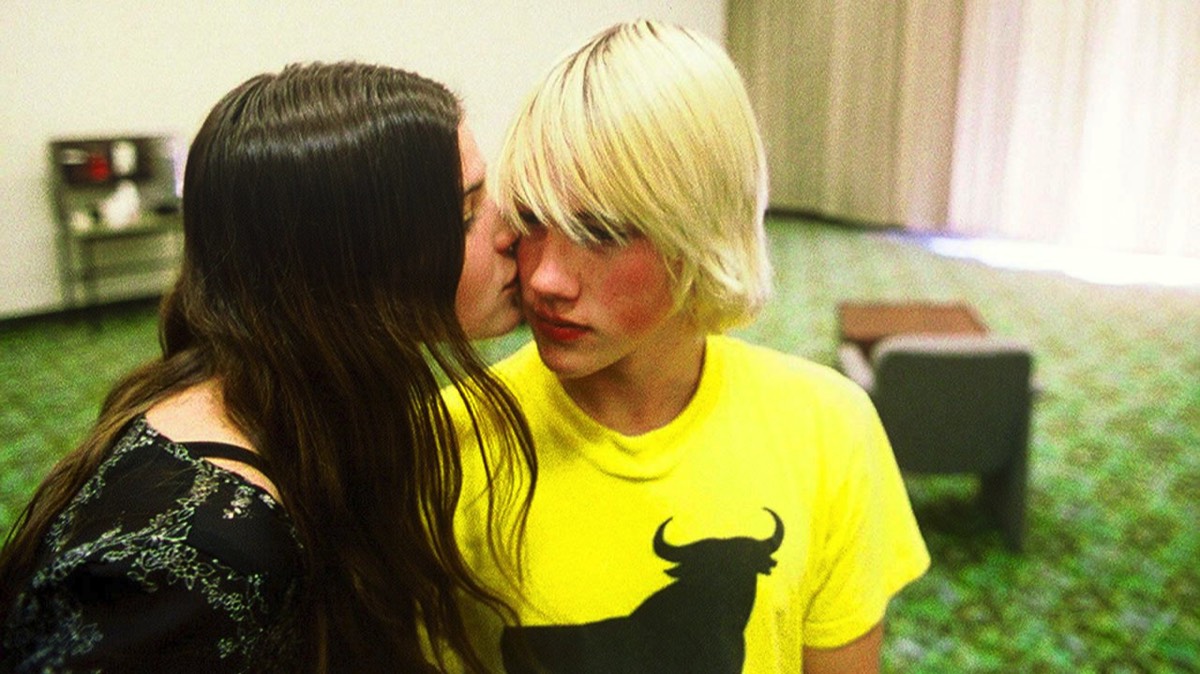
Elephant (2003)
"Directors often flip-flop between the demands of art and commerce, alternating personal projects with those that pay the bills. However, few of them have produced movies as violently and puzzlingly different as Gus Van Sant, prompting wry speculation in the press that their could, in fact, be two Gus Van Sants... If there is one thing that unites the two Van Sants, it is the pervasive sense of melancholic transience that is eloquently expressed in his trademark shots of clouds (in the perpetual motion of time-lapse photography), going nowhere fast." - Lloyd Hughes (The Rough Guide to Film, 2007)
"Subvert it, change it, deconstruct it—that’s what Van Sant has done to the Hollywood way of making movies. Arriving at film through photography and advertising and after studying painting at the Rhode Island School of Design, he has consistently challenged the subject matter, thematic preoccupations, and structures of Hollywood cinema. In Mala Noche, his first film, Van Sant took a semiautobiographical novel by a local Portland writer, Walt Curtis, and made a delicate and moving poem. With Drugstore Cowboy, he furthered his technique, working with stars while expanding his cinematic vocabulary. In the films that followed, he has experimented with the form of film storytelling, whether through second-act forays into Shakespeare (My Own Private Idaho), channel-switching through time and points of view (To Die For), or questioning the logic of the Hollywood remake by rigorously subjecting it to the conceptual art strategy of appropriation (Psycho)." - Scott Macaulay (Walker Art Center, 2003)
"A director who is capable of crafting both deeply unconventional independent films and mainstream crowd-pleasers, Gus Van Sant has managed to carve an enviable niche for himself in Hollywood. Since debuting in 1985 with Mala Noche, Van Sant has become one of the premiere bards of dysfunction, populating his films with a parade of hustlers, junkies, psychopathic weather girls, homicidal teens, and troubled geniuses." - Rebecca Flint Marx (AllMovie)
"Van Sant is gay, gritty, and arty all at the same time. There is no trace of camp or swishiness: he is determined on heartfelt feelings and commonplace tragedy. He has a great eye, and an even better sense of adjacency - not quite cutting, but a feeling for cut-up simultaneity." - David Thomson (The New Biographical Dictionary of Film, 2002)
"Part of me believes in anonymous art. I got that from a writer named Jamake Highwater, who wrote about painting before the Renaissance. The way people related to art in, say, ancient Greece. How it was about the community for the community and not the self-expression of the artist. I thought of Good Will Hunting and Finding Forrester as doing it for the people, and wanted to speak without the hindrance of my own style. I'm not sure if that's possible, but it was my rationale." - Gus Van Sant
Selected Filmography
Loading filmography...
Gus Van Sant / Favourite Films
The Last of England (1988) Derek Jarman, The Palm Beach Story (1942) Preston Sturges, Sátántangó (1994) Béla Tarr, Sunrise (1927) F.W. Murnau, Synecdoche, New York (2008) Charlie Kaufman.
Source: Newsweek (2008)
The Last of England (1988) Derek Jarman, The Palm Beach Story (1942) Preston Sturges, Sátántangó (1994) Béla Tarr, Sunrise (1927) F.W. Murnau, Synecdoche, New York (2008) Charlie Kaufman.
Source: Newsweek (2008)
Gus Van Sant / Fan Club
Michael Atkinson, Xavier Dolan, Joachim Lafosse, Amy Taubin, David Ehrenstein, Wang Xiaoshuai, Susanna Helke, Nobuhiro Yamashita, Kim Hye-ri, Chico Fireman, Fábio Yamaji, Todd Ford.
Michael Atkinson, Xavier Dolan, Joachim Lafosse, Amy Taubin, David Ehrenstein, Wang Xiaoshuai, Susanna Helke, Nobuhiro Yamashita, Kim Hye-ri, Chico Fireman, Fábio Yamaji, Todd Ford.
"Fan Club"
These film critics/filmmakers have, on multiple occasions, selected this director’s work within film ballots/lists that they have submitted.
These film critics/filmmakers have, on multiple occasions, selected this director’s work within film ballots/lists that they have submitted.