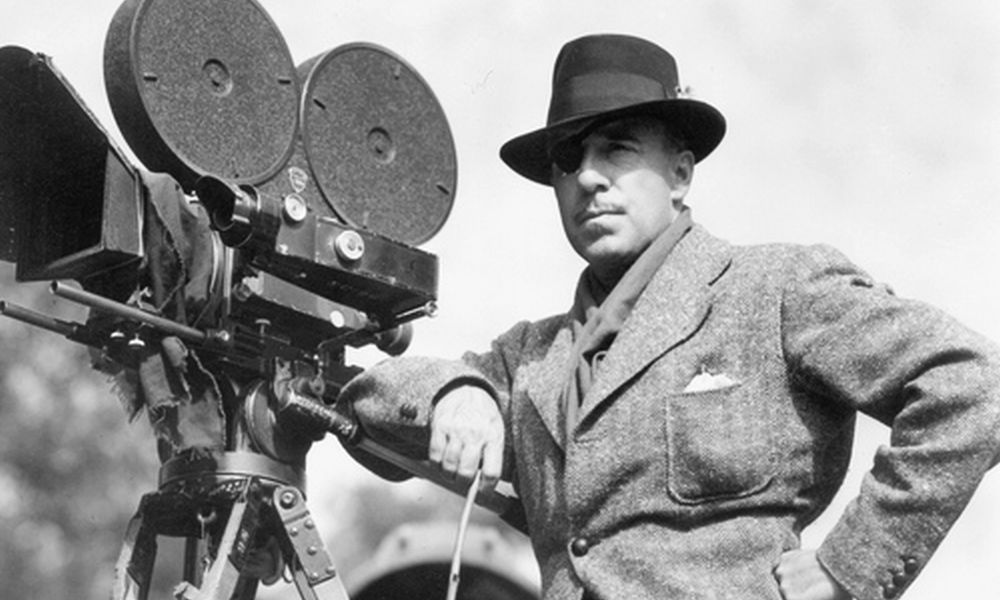
"A straightforward storyteller, he made many fine, unpretentious, smoothly paced films with the accent on entertainment and slick production values. He tackled a variety of genres but was at his best with virile outdoor action dramas, which he often mellowed with moments of genuine tenderness... A dynamic, instinctive director, he is considered by many critics to be one of the great primitive artists of the screen." - The Film Encyclopedia, 2012
Raoul Walsh
Director / Producer / Screenwriter
(1887-1980) Born March 11, New York City, New York, USA
Top 250 Directors / 50 Key Noir Directors
(1887-1980) Born March 11, New York City, New York, USA
Top 250 Directors / 50 Key Noir Directors
Key Production Countries: USA, UK
Key Genres: Drama, Western, Action, Romance, Adventure, War, Melodrama, Traditional Western, Comedy, Gangster Film, War Drama, Adventure Drama
Key Collaborators: Max Steiner (Composer), Sidney Hickox (Cinematographer), Alan Hale (Leading Character Actor), Ted Smith (Production Designer), Errol Flynn (Leading Actor), James Cagney (Leading Actor), Ida Lupino (Leading Actress), Virginia Mayo (Leading Actress), Hal B. Wallis (Producer), Jack Killifer (Editor), Arthur Kennedy (Leading Character Actor), Henry Hull (Leading Character Actor)
Key Genres: Drama, Western, Action, Romance, Adventure, War, Melodrama, Traditional Western, Comedy, Gangster Film, War Drama, Adventure Drama
Key Collaborators: Max Steiner (Composer), Sidney Hickox (Cinematographer), Alan Hale (Leading Character Actor), Ted Smith (Production Designer), Errol Flynn (Leading Actor), James Cagney (Leading Actor), Ida Lupino (Leading Actress), Virginia Mayo (Leading Actress), Hal B. Wallis (Producer), Jack Killifer (Editor), Arthur Kennedy (Leading Character Actor), Henry Hull (Leading Character Actor)
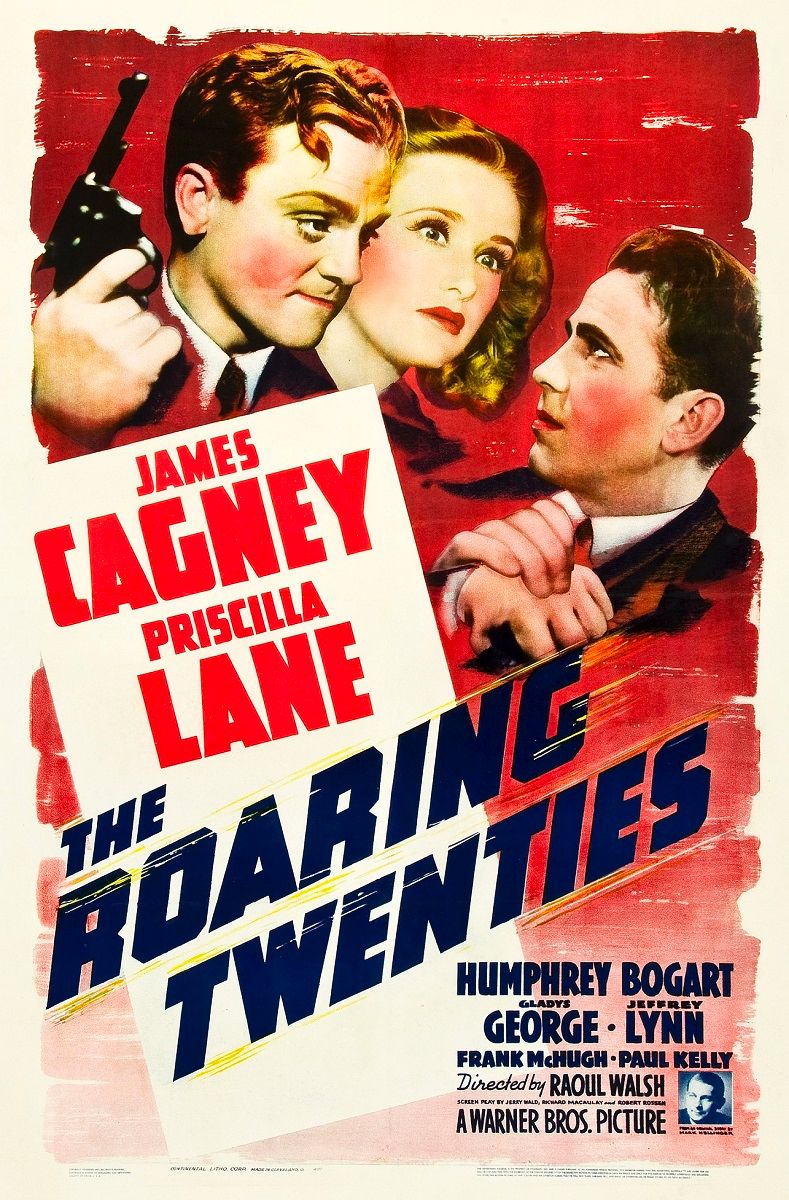
"When the critics from Cahiers du cinéma were conferring auteur status upon erstwhile Hollywood hacks, they tended to favour the sort of macho directors whose lives were as rugged and red-blooded as the films they made. Raoul Walsh was the epitome of the brawny, no-nonsense maverick who demonstrated a vigorous sense of adventure both on and off the screen... His forte was the action picture, fuelled by an abrasive energy and gruff decency, in which two-fisted heroes defined their own moral code in an indifferent universe. With a trio of gangster movies, he took the genre to new heights: The Roaring Twenties (1939), High Sierra (1941) and White Heat (1949)." - Lloyd Hughes (The Rough Guide to Film, 2007)
"Raoul Walsh's extraordinary career spanned the history of the American motion picture industry from its emergence, through its glory years in the 1930s and 1940s, and into the television era. Like his colleagues Allan Dwan, King Vidor, John Ford, and Henry King, whose careers also covered 50 years, Walsh continuously turned out popular fare, including several extraordinary hits... Raoul Walsh is now accepted as an example of a master Hollywood craftsman who worked with naive skill and an animal energy, a director who was both frustrated and buoyed by the studio system." - Douglas Gomery (The St. James Film Directors Encyclopedia, 1998)
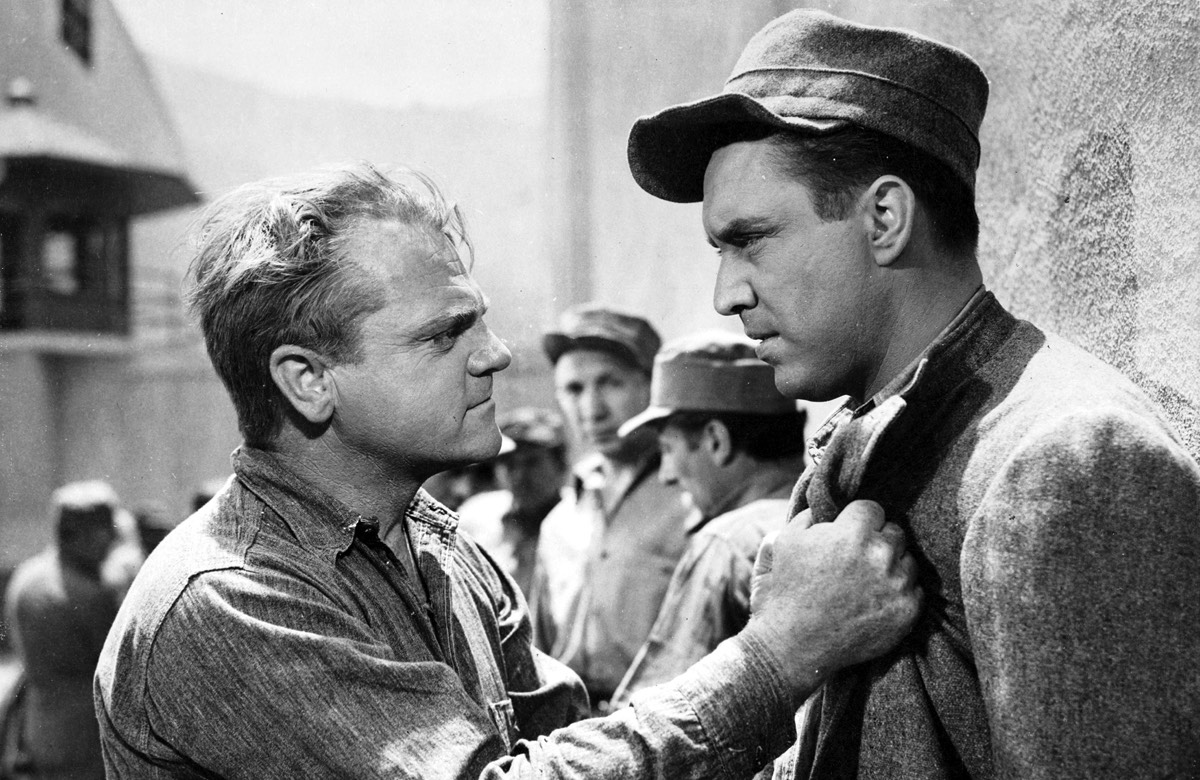
White Heat (1949)
"It is time to consider Walsh as rather more than a tough guy, a fellow who likes to laugh, a primitive with rough sentiments. This passionate Shakespearean is a physical film-maker only because he depicts a world of spiritual turmoil. His characters are projected on the world by their own energy and committed to a space that only exists for their actions, fury, spirit, craft, ambition and unbridled dreams." - Jean Douchet
"Indelible auteur, he brought innovation and signature style to a plethora of genres: the western, the woman’s film, melodrama, the musical, dance films, boxing movies, gangster potboilers, the sword-and-sandal (or peplum) epic, film noir, depression comedy, the war movie, the pirate movie, the period piece… From 1913 to 1964, from A Mother’s Love (Pathé, filmed in Brooklyn) and Paul Revere’s Ride (also Pathé, shot in Fort Lee, NJ) to A Distant Trumpet (Warner Brothers) he was responsible for – mostly directing, often editing and, early on, acting in – 176 films." - Harvard Film Archive, 2013
"In Walsh's world, action was more than an imperative, it was an ethos. To venture out, to pit one's self against the unknown was a defining act and in that act was affirmation. Raoul Walsh always made sure the motion was in motion pictures." - BAMPFA, 2019
"Walsh’s inclusion of scenes of daily human pathetique should separate him immediately from American mooring, and especially from the action specialists, Hawks, Farrow, Curtiz, with whom he’s usually classed. A good director of homeliness, innocence, vulnerability, Walsh can be amazingly direct, forthright, clear, rhythmic, a dedicated-to-folk cousin of Renoir’s Toni, Vigo’s L’Atalante, Brassaï’s street life photographs, with more brisk jocularity than his French counterparts." - Manny Farber, 1971
"'Action!', the word that starts the cameras rolling, sums up the career of this American director. Sprawling, brawling, often almost primitive action, teeming across the screen, marks Walsh's stories of comradeship and battles against the odds. He had a talent for making the densest of action sequences seem uncomplicated and uncluttered and his characters, like the scenes they distinguished, often have a raw, unfettered power." - David Quinlan (Quinlan's Film Directors, 1999)
"The very name Raoul Walsh evokes sentimental stirrings, not only because he specialized in richly textured period pieces, but because perhaps more than any other great director, he embodies the durability, professionalism, and lack of vanity ascribed to studio workhorses. Walsh worked his way up the ranks on both sides of the camera. While playing John Wilkes Booth in The Birth of a Nation, he served as Griffith’s assistant director and co-editor, receiving no screen credit for any of it. A founding member of the Academy of Motion Picture Arts and Sciences, Walsh earned no nominations himself in a career encompassing such classics as The Big Trail, Gentleman Jim, and White Heat." - Steven Mears (Film Comment, 2017)
"A supreme action director, Walsh would be regarded as one of the greats of Hollywood's golden era if not for a long period in the 1930s when he languished with mediocre projects. A number of excellent silent films (What Price Glory?) weren't followed by work of similar quality until the director went to Warner Brothers in 1939. Walsh rarely gave in to the psychology of his characters, but directed on a pure narrative level which showed what was important without merely telling it in the dialogue." - William R. Meyer (The Film Buff's Catalog, 1978)
“Loud, extrovert, unpretentious, and fast-paced adventure movies were Raoul wash’s forte, the best of which were vehicles for stars like James Cagney, Humphrey Bogart and Errol Flynn.” - Ronald Bergan (Film - Eyewitness Companions, 2006)
"The transition from silents to sound pictures didn't hit me in any way. I just kept the thing moving regardless of the sound... Of course, there was a great upheaval amongst the directors when talking pictures came in. They called me a renegade because I was one of the first ones to do an outdoor talking picture. They said that they'd created such a medium with pantomime, you know, and now this talking stuff was going to destroy it all. I said it was going to destroy us if we didn't get along and get with it. So they finally all came in." - Raoul Walsh (Directing the Film, 1976)
"My greatest disappointment was censorship, which until recently was very strict. I could remake some of the pictures I made way back: it would be great. All the stuff that was cut out." - Raoul Walsh (Sight & Sound, 1972)
Selected Filmography
Loading filmography...
Raoul Walsh / Fan Club
José Luis Guarner, Martin Scorsese, Michel Mourlet, Pierre Rissient, Bertrand Tavernier, Richard Brody, Miguel Marías, Pierre Salvadori, Peter von Bagh, Michel Ciment, Chris Fujiwara, Richard T. Jameson.
José Luis Guarner, Martin Scorsese, Michel Mourlet, Pierre Rissient, Bertrand Tavernier, Richard Brody, Miguel Marías, Pierre Salvadori, Peter von Bagh, Michel Ciment, Chris Fujiwara, Richard T. Jameson.
"Fan Club"
These film critics/filmmakers have, on multiple occasions, selected this director’s work within film ballots/lists that they have submitted.
These film critics/filmmakers have, on multiple occasions, selected this director’s work within film ballots/lists that they have submitted.