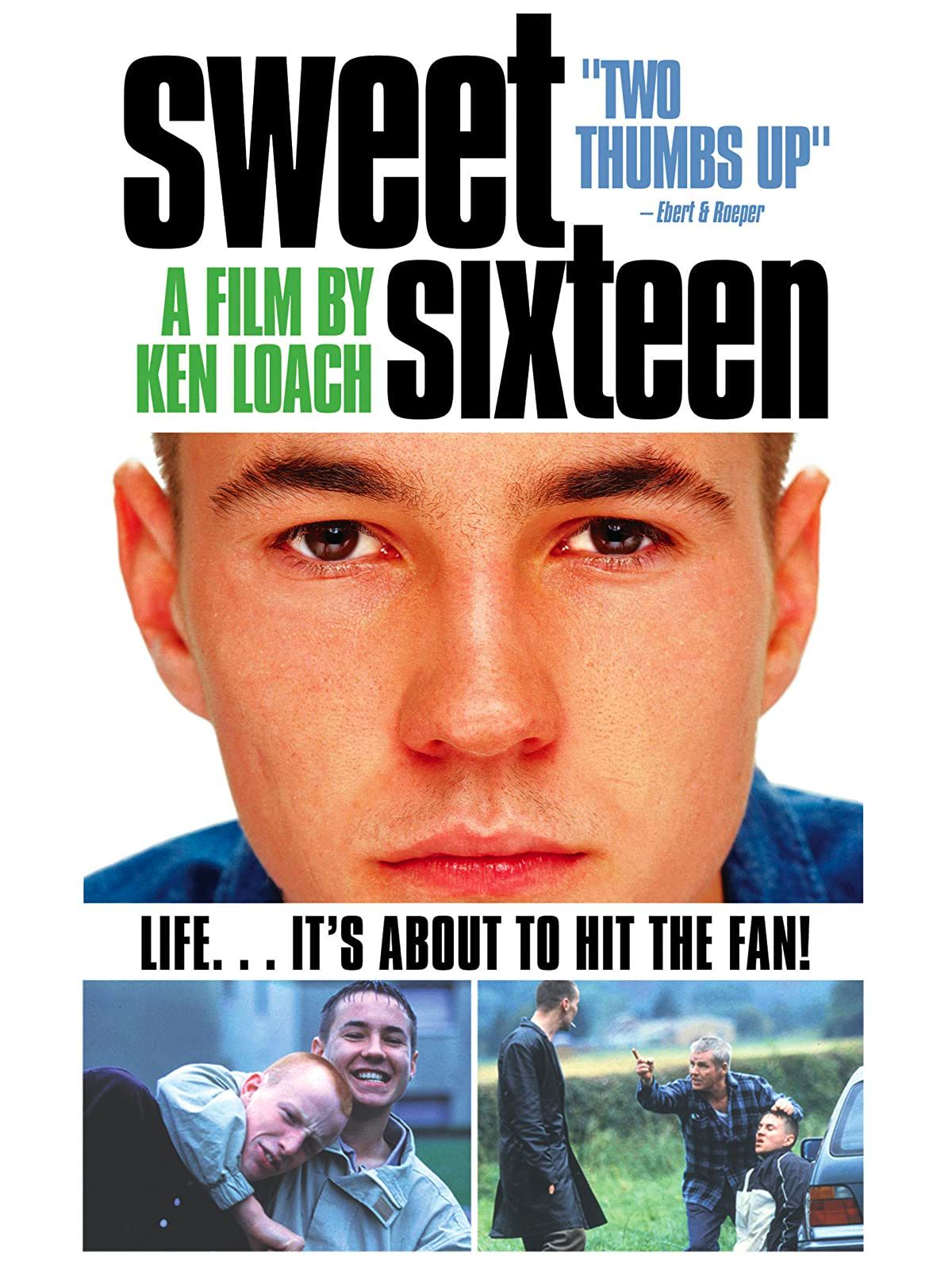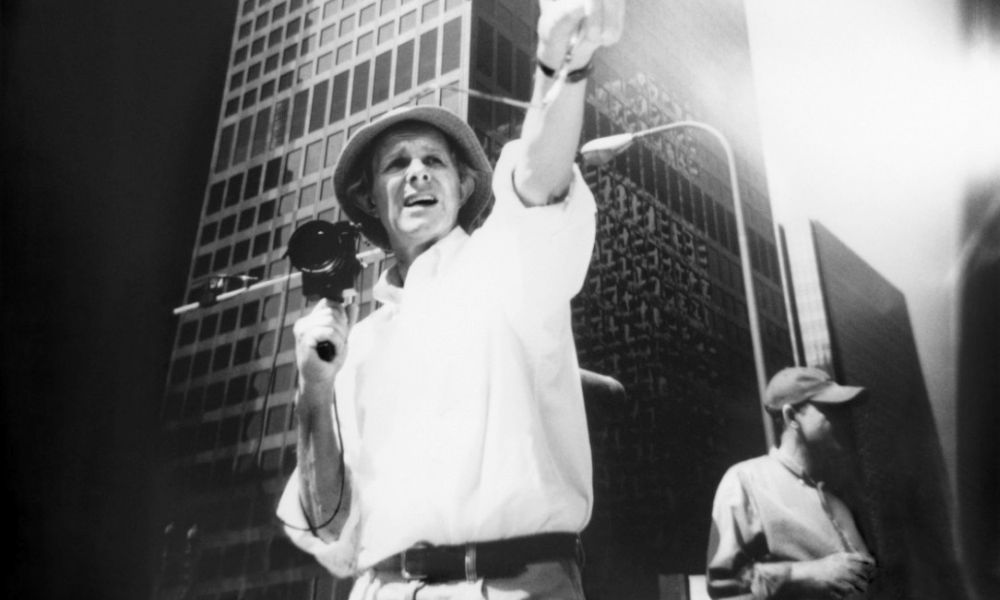
"Once the stormy petrel of the British cinema, Loach is now its national institution. Still wearing his leftist social and political consciences firmly on his sleeve, Loach has now settled into a groove of filmmaking that has both given us a reassuring number of films and earned a wider acceptance from the discerning filmgoing public." - David Quinlan (Quinlan's Film Directors, 1999)
Ken Loach
Director / Screenwriter / Producer
(1936- ) Born June 17, Nuneaton, Warwickshire, England
Top 250 Directors
(1936- ) Born June 17, Nuneaton, Warwickshire, England
Top 250 Directors
Key Production Countries: UK, France, Spain, Italy, Germany, Belgium
Key Genres: Drama, Social Problem Film, Family Drama, Urban Drama, Comedy Drama, Documentary, Political Drama, Coming-of-Age, Psychological Drama, Romantic Drama, Culture & Society
Key Collaborators: Jonathan Morris (Editor), Rebecca O'Brien (Producer), George Fenton (Composer), Martin Johnson (Production Designer), Paul Laverty (Screenwriter), Barry Ackroyd (Cinematographer), Fergus Clegg (Production Designer), Tony Garnett (Producer), Jim Allen (Screenwriter), Chris Menges (Cinematographer), Robbie Ryan (Cinematographer), Roy Watts (Editor)
Key Genres: Drama, Social Problem Film, Family Drama, Urban Drama, Comedy Drama, Documentary, Political Drama, Coming-of-Age, Psychological Drama, Romantic Drama, Culture & Society
Key Collaborators: Jonathan Morris (Editor), Rebecca O'Brien (Producer), George Fenton (Composer), Martin Johnson (Production Designer), Paul Laverty (Screenwriter), Barry Ackroyd (Cinematographer), Fergus Clegg (Production Designer), Tony Garnett (Producer), Jim Allen (Screenwriter), Chris Menges (Cinematographer), Robbie Ryan (Cinematographer), Roy Watts (Editor)
"Ken Loach is not only Britain’s most political filmmaker, he is also its most censored—and the two are not entirely unconnected. Loach’s career illustrates all too clearly the immense difficulties facing the radical filmmaker in Britain today: the broadcasting organisations’ position within the state makes them extraordinarily sensitive sites from which to tackle certain fundamental political questions (about labour relations, ‘‘national security,’’ or Northern Ireland, for example), while the film industry, though less subject to political interference and self- censorship, simply finds Loach’s projects too ‘‘uncommercial,’’ thanks to its habitually poverty-stricken state... As Ken Loach ages, his films remain consistently provocative and politically savvy, with a deep respect for and understanding of his struggling, working class characters." - Julian Petley (International Dictionary of Films and Filmmakers, 2000)
"Loach has remained steadfastly attentive to working-class experience - to such an extent that some of his films have had (or needed) "English" subtitles when released in America... For me, it is easier to respect Loach than enjoy him: he seldom has the bite of Alan Clarke, for instance. But in his dedication and seriousness, he is an exemplary figure. Even in the insane prosperity of the nineties, Loach pursued his destiny, and he grew gentler, subtler, and funnier. It was one of the most impressive developments in a filmmaker." - David Thomson (The New Biographical Dictionary of Film, 2002)
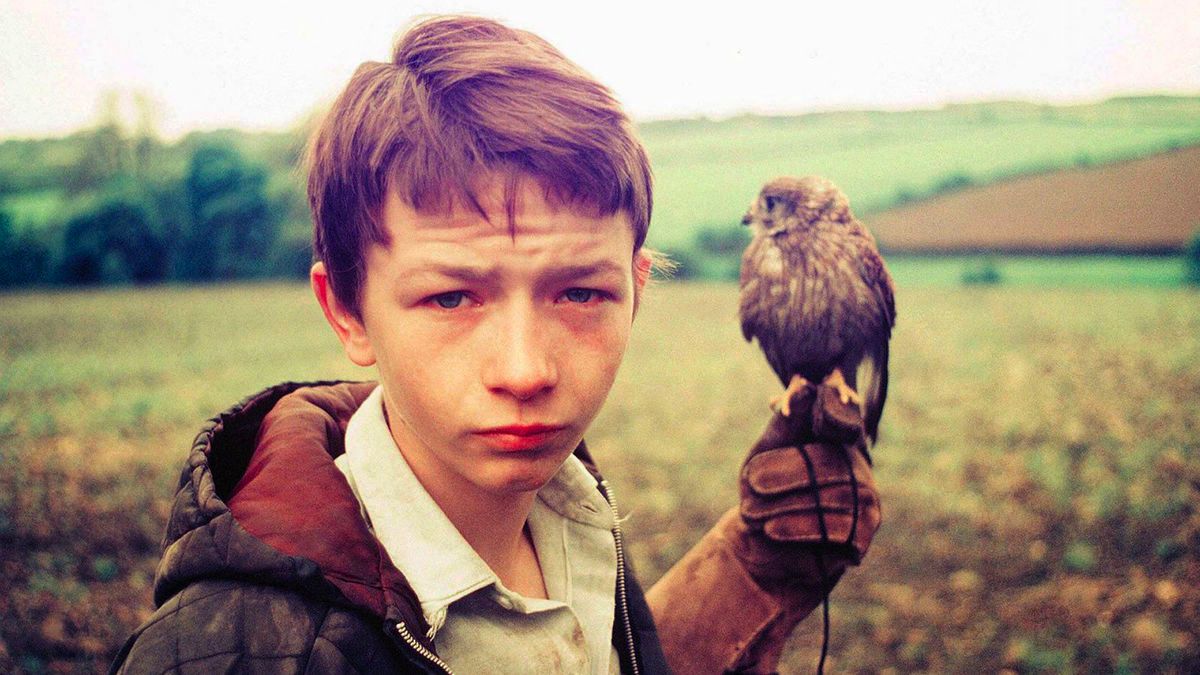
Kes (1969)
"Ken Loach is considered one of the elder statesmen of the British film industry. This has not, however, blunted his ongoing commitment to bringing social and political issues to the screen. A socialist, Loach has built a reputation for making films that offer a sympathetic, and yet unpatronizing, view of the lives of Britain's working class." - Andy Willis (501 Movie Directors, 2007)
"It is no accident that his best work has been produced at times of supposed affluence, in the mid '60s and the '90s, when he has often been a lone voice, bravely and resolutely standing up for the disadvantaged and the downtrodden. Few directors have been as consistent in their themes and their filmic style, or as principled in their politics, as Loach has in a career spanning five decades. Without doubt he is Britain's foremost political filmmaker." - Lez Cooke (BFI Screen Online)
"When discussing Ken Loach's aesthetic, critics can't avoid using words like gritty and realistic. Loach exhibits a personal modesty which is translated into his directorial style, a self-effacing cinéma vérité approach. However, there are some distinctive characteristics in his work, such as his concerns with the family unit and his ability to capture the flavour and timbre of previously undocumented lives and communities." - Lloyd Hughes (The Rough Guide to Film, 2007)
"Many critics have made the mistake of assuming that Loach is all politics and no craft, that he exists solely to preach to the converted. All one has to do is watch his movies to see the legacy of works like The Battle of Algiers and Bicycle Thieves. Kes is as beautifully shot as any work of Italian neorealism. Loach may eschew the bells and whistles of overt stylization, but his commitment to authenticity does not mean a lack of visual care. He prefers real locations to sets, the noise of the street to grand sound design. His camera moves through people’s lives like a character in and of itself, not gawking but contributing." - Kayleigh Donaldson (Paste Magazine, 2024)
"On television and in the cinema, Loach has contributed realistic dramas which speak passionately of social issues, yet do not demean the humanity of their characters." - William R. Meyer (The Film Buff's Catalog, 1978)
"The emotional force of his films is ensured by superbly naturalistic performances, an unadorned camera style. a gritty, almost documentary approach to dialogue, milieu, and the mundane fabric of daily existence, rendered dramatic by Loach's clear political commitment." - Geoff Andrew (The Director's Vision, 1999)
"Ken Loach has sustained a commitment to representing the disenfranchised and exploring controversial social, historical and political issues for nearly forty years… Theatrical and television training impressed upon Loach the importance of good writers… Famous for location shooting and working with unknown, semi- or non-professional actors, Loach uses various techniques too generate remarkably 'authentic' performances." - Martin Stollery (Contemporary British and Irish Film Directors: A Wallflower Critical Guide, 2001)
"A movie isn't a political movement, a party or even an article. It's just a film. At best it can add its voice to public outrage." - Ken Loach
"If change is to come, it must come from the working class. That’s why telling their story is important. That’s why knowing our history is important." - Ken Loach
"I turned down the OBE because it's not a club you want to join when you look at the villains who've got it. It's all the things I think are despicable: patronage, deferring to the monarchy and the name of the British Empire, which is a monument of exploitation and conquest." - Ken Loach
Selected Filmography
Loading filmography...
Ken Loach / Favourite Films
Ashes and Diamonds (1958) Andrzej Wajda, The Battle of Algiers (1965) Gillo Pontecorvo, The Battle of Chile: Parts 1-3 (1975-79) Patricio Guzmán, Bicycle Thieves (1948) Vittorio De Sica, Closely Watched Trains (1966) Jirí Menzel, The Firemen's Ball (1967) Milos Forman, The Golden Dream (2013) Diego Quemada-Diez, Loves of a Blonde (1965 Milos Forman, Take My Eyes (2003) Icíar Bollaín, Twenty Years Later (1984) Eduardo Coutinho.
Source: LaCinetek (2024)
Ashes and Diamonds (1958) Andrzej Wajda, The Battle of Algiers (1965) Gillo Pontecorvo, The Battle of Chile: Parts 1-3 (1975-79) Patricio Guzmán, Bicycle Thieves (1948) Vittorio De Sica, Closely Watched Trains (1966) Jirí Menzel, The Firemen's Ball (1967) Milos Forman, The Golden Dream (2013) Diego Quemada-Diez, Loves of a Blonde (1965 Milos Forman, Take My Eyes (2003) Icíar Bollaín, Twenty Years Later (1984) Eduardo Coutinho.
Source: LaCinetek (2024)
Ken Loach / Fan Club
Daniel Lindvall, Gurinder Chadha, Hirokazu Koreeda, Joachim Lafosse, Michel Gondry, Kenneth Turan, Sandra Hebron, Graham Fuller, Michael Apted, Paul Greengrass, Briony Hanson, Peter Kosminsky.
Daniel Lindvall, Gurinder Chadha, Hirokazu Koreeda, Joachim Lafosse, Michel Gondry, Kenneth Turan, Sandra Hebron, Graham Fuller, Michael Apted, Paul Greengrass, Briony Hanson, Peter Kosminsky.
"Fan Club"
These film critics/filmmakers have, on multiple occasions, selected this director’s work within film ballots/lists that they have submitted.
These film critics/filmmakers have, on multiple occasions, selected this director’s work within film ballots/lists that they have submitted.