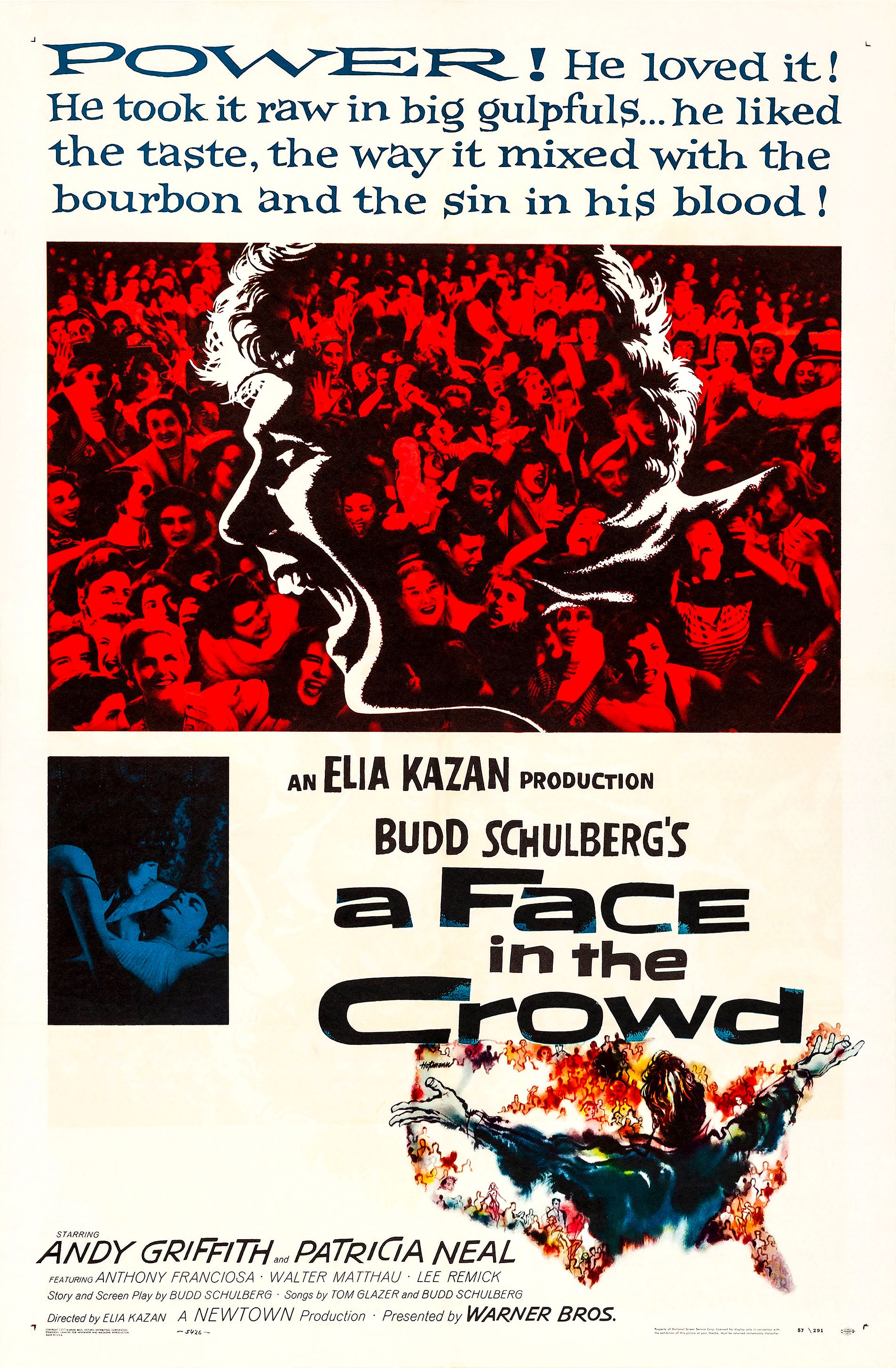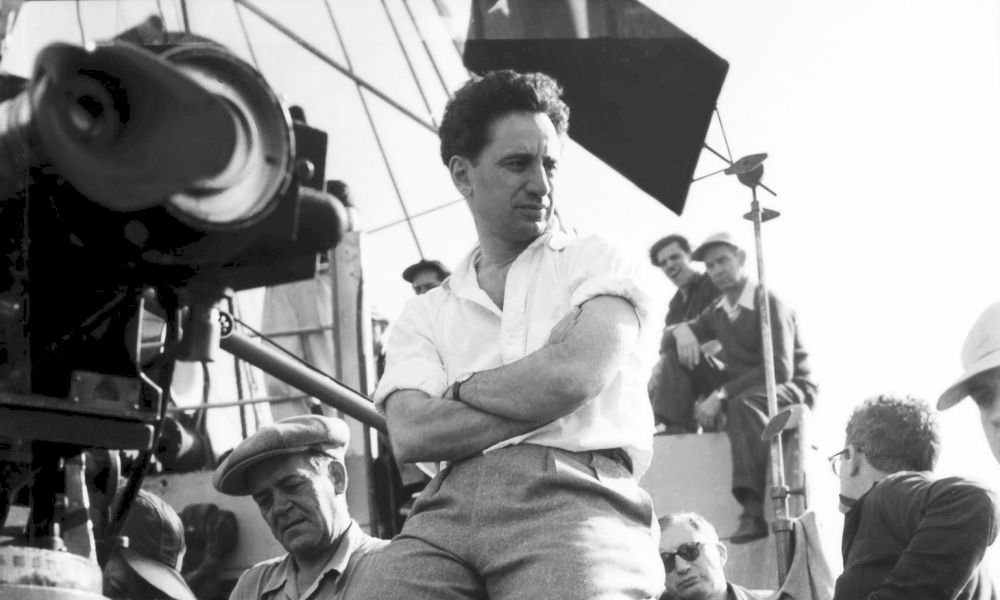
"The typically Kazanian powerhouse combination of challenging subject matter, dynamic location shooting, and the heightened, even overwrought naturalism of blistering Method performances helped change the face of American cinema." - Tom Charity (The Rough Guide to Film, 2007)
Elia Kazan
Director / Producer / Screenwriter
(1909-2003) Born September 7, Constantinople, Ottoman Empire (now Istanbul, Turkey)
Top 250 Directors
(1909-2003) Born September 7, Constantinople, Ottoman Empire (now Istanbul, Turkey)
Top 250 Directors
Key Production Country: USA
Key Genres: Drama, Family Drama, Americana, Message Movie, Coming-of-Age, Rural Drama, Psychological Drama, Period Film, Showbiz Drama
Key Collaborators: Lyle Wheeler (Production Designer), Harmon Jones (Editor), Karl Malden (Leading Character Actor), Alfred Newman (Composer), Marlon Brando (Leading Actor), Darryl F. Zanuck (Producer), Joseph MacDonald (Cinematographer), Boris Kaufman (Cinematographer), Gene Milford (Editor), Richard Sylbert (Production Designer), Richard Day (Production Designer), Gene Callahan (Production Designer)
Key Genres: Drama, Family Drama, Americana, Message Movie, Coming-of-Age, Rural Drama, Psychological Drama, Period Film, Showbiz Drama
Key Collaborators: Lyle Wheeler (Production Designer), Harmon Jones (Editor), Karl Malden (Leading Character Actor), Alfred Newman (Composer), Marlon Brando (Leading Actor), Darryl F. Zanuck (Producer), Joseph MacDonald (Cinematographer), Boris Kaufman (Cinematographer), Gene Milford (Editor), Richard Sylbert (Production Designer), Richard Day (Production Designer), Gene Callahan (Production Designer)
"Individual will struggling powerfully against another person, family, society—this is Elia Kazan’s view of the world that infuses his films. Kazan in his time was the most celebrated director of theatre and film in the United States. Working with Arthur Miller and Tennessee Williams on stage or with playwrights and novelists such as Moss Hart, John Steinbeck, Paul Osborne, Budd Schulberg, and William Inge, Kazan created a unique group of films. Although his reputation was tarnished and career ruined by his testimony before the House Un-American Activities Committee in the 1950s, his work as a director is unique in American film. His director’s idea, that drama is life, infuses his work with a rawness that makes his films stand apart." - Ken Dancyger (The Director's Idea: The Path to Great Directing, 2006)
"In works like Viva Zapata, On the Waterfront, East of Eden, Baby Doll and Wild River (his quietest and best film), he abandoned the studio for location shooting, but retained the services of Actors Studio stars like Brando, Dean and Steiger, effectively revolutionising film acting; in retrospect, however, many of the performances look less naturalistic than overwrought, just as the direction, despite the focus on 'serious' issues, often seems overemphatic." - Geoff Andrew (The Director's Vision, 1999)
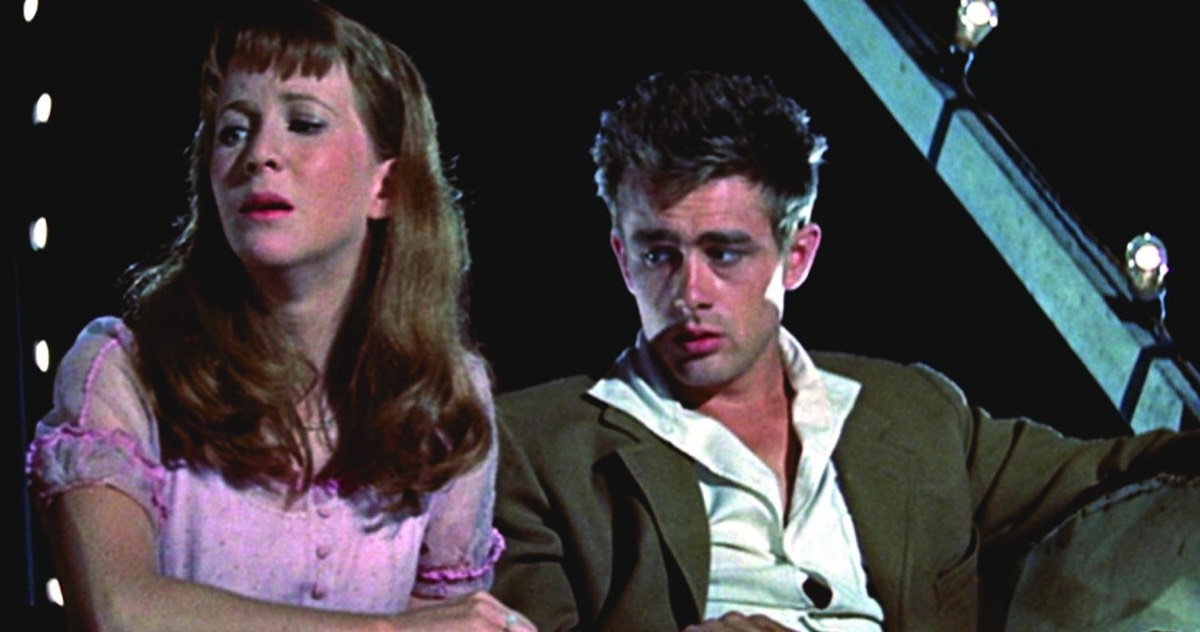
East of Eden (1955)
"As an archetypal auteur, he progressed from working on routine assignments to developing more personal themes, producing his own pictures, and ultimately directing his own scripts. At his peak during a period (1950–1965) of anxiety, gimmickry, and entropy in Hollywood, Kazan remained among the few American directors who continued to believe in the cinema as a medium for artistic expression and who brought forth films that consistently reflected his own creative vision." - Lloyd Michaels (The St. James Film Directors Encyclopedia, 1998)
"Elia Kazan was a dominant and hugely influential force in the postwar American cinema, a director whose keen intuition and perspicacity made him almost impervious to the vicissitudes of the declining studio system and ideally suited to take advantage of the gradual shift towards independent production. Prolific in spite of Hollywood's dramatic ebbs, Kazan created a group of vital, emotionally intense and frequently controversial films that helped define American film history and popular culture… Kazan's greatest films remain unmatched for their ability both to illuminate the most intimate emotions and orchestrate sweeping, symphonic visions of a society's deepest anxieties and ambitions." - Harvard Film Archive, 2009
"All of Elia Kazan's films have strong social themes, a keen sense of location and superb performances. Despite his betrayal of his friends at the McCarthy hearings in 1952, Kazan's reputation as one of the finest directors in the US has never wavered." - Ronald Bergan (Film - Eyewitness Companions, 2006)
"Regardless of how much his personal principles may still cloud the critical judgment of his work, the general consensus is that Kazan’s filmography is an exceptional catalogue of resolute themes, extraordinary performances, and illuminating – in some cases prophetic – narratives." - Jeremy Carr (Senses of Cinema, 2016)
"Kazan's violence has always been more excessive than expressive, more mannered than meaningful. There is an edge of hysteria even to his pauses and silences, and the thin line between passion and neurosis has been crossed time and again. Yet, his brilliance with actors is incontestable. The revolutionary performances of Marlon Brando and the late James Dean are irrevocable, and East of Eden, though technically dated, is still a creditable achievement." - Andrew Sarris (The American Cinema, 1968)
"Important American film and stage director, sometime actor and writer, of Greco-Turkish descent, identified with the advent of the Method school of acting and drama (especially that of Tennessee Williams) in American films during the 1940s and 1950s." - Margaret Hinxman (The International Encyclopedia of Film, 1972)
"A social critic who examines Americans and the American dream, Kazan has turned out some of the most powerful cinema studies since World War II." - William R. Meyer (The Film Buff's Catalog, 1978)
"When you know what an actor has, you can reach in and arouse it. If you don't know what he has, you don't know what the hell is going on." - Elia Kazan
Selected Filmography
Loading filmography...
GF Greatest Films ranking (★ Top 1000 ● Top 2500)
T TSPDT N 1,000 Noir Films
R Jonathan Rosenbaum S Martin Scorsese
T TSPDT N 1,000 Noir Films
R Jonathan Rosenbaum S Martin Scorsese
Elia Kazan / Favourite Films
Aerograd (1935) Alexander Dovzhenko, The Baker's Wife (1938) Marcel Pagnol, Battleship Potemkin (1925) Sergei Eisenstein, Bicycle Thieves (1948) Vittorio De Sica, Cesar (1936) Marcel Pagnol, Fanny (1932) Marc Allégret, Flesh and the Devil (1926) Clarence Brown, The Gold Rush (1925) Charles Chaplin, Marius (1931) Alexander Korda, Rome, Open City (1945) Roberto Rossellini, Shoulder Arms (1918) Charles Chaplin, Target for Tonight (1941) Harry Watt.
Source: Cinematheque Belgique (1952)
Aerograd (1935) Alexander Dovzhenko, The Baker's Wife (1938) Marcel Pagnol, Battleship Potemkin (1925) Sergei Eisenstein, Bicycle Thieves (1948) Vittorio De Sica, Cesar (1936) Marcel Pagnol, Fanny (1932) Marc Allégret, Flesh and the Devil (1926) Clarence Brown, The Gold Rush (1925) Charles Chaplin, Marius (1931) Alexander Korda, Rome, Open City (1945) Roberto Rossellini, Shoulder Arms (1918) Charles Chaplin, Target for Tonight (1941) Harry Watt.
Source: Cinematheque Belgique (1952)
Elia Kazan / Fan Club
Martin Scorsese, José Luis Guarner, Krzysztof Zanussi, Lone Scherfig, Spike Lee, Ira Sachs, David Pirie, Nicolas Cage, Mark Dujsik, Gilles Jacob, Catherine Breillat, Oliver Stone.
Martin Scorsese, José Luis Guarner, Krzysztof Zanussi, Lone Scherfig, Spike Lee, Ira Sachs, David Pirie, Nicolas Cage, Mark Dujsik, Gilles Jacob, Catherine Breillat, Oliver Stone.
"Fan Club"
These film critics/filmmakers have, on multiple occasions, selected this director’s work within film ballots/lists that they have submitted.
These film critics/filmmakers have, on multiple occasions, selected this director’s work within film ballots/lists that they have submitted.