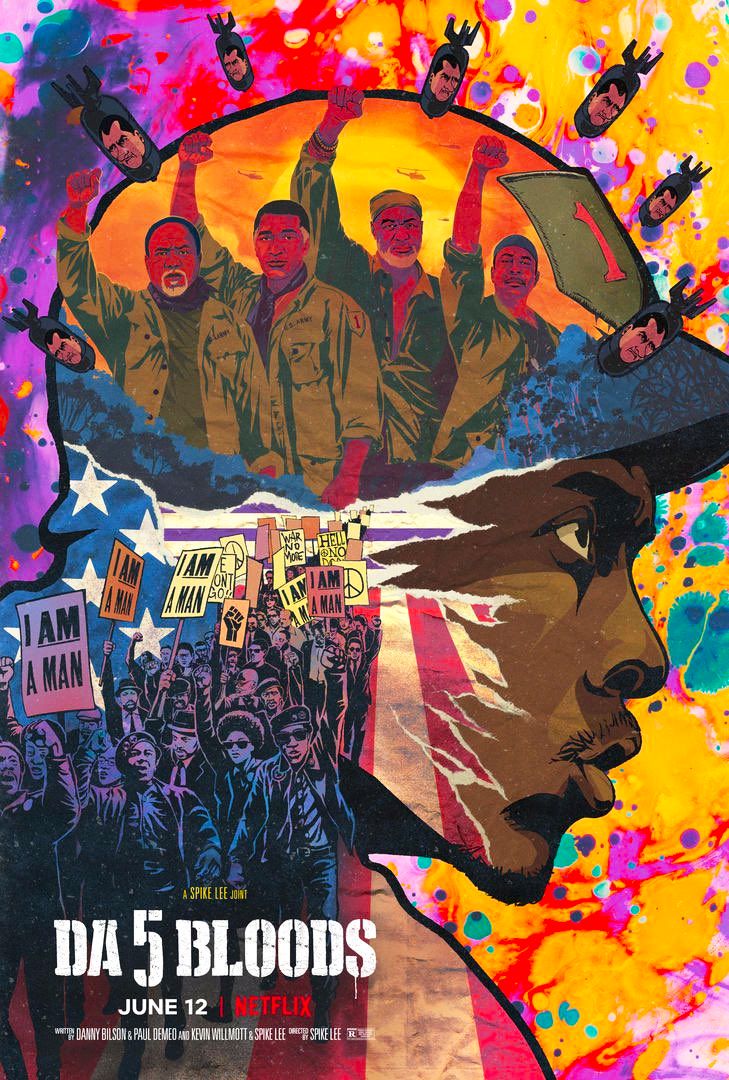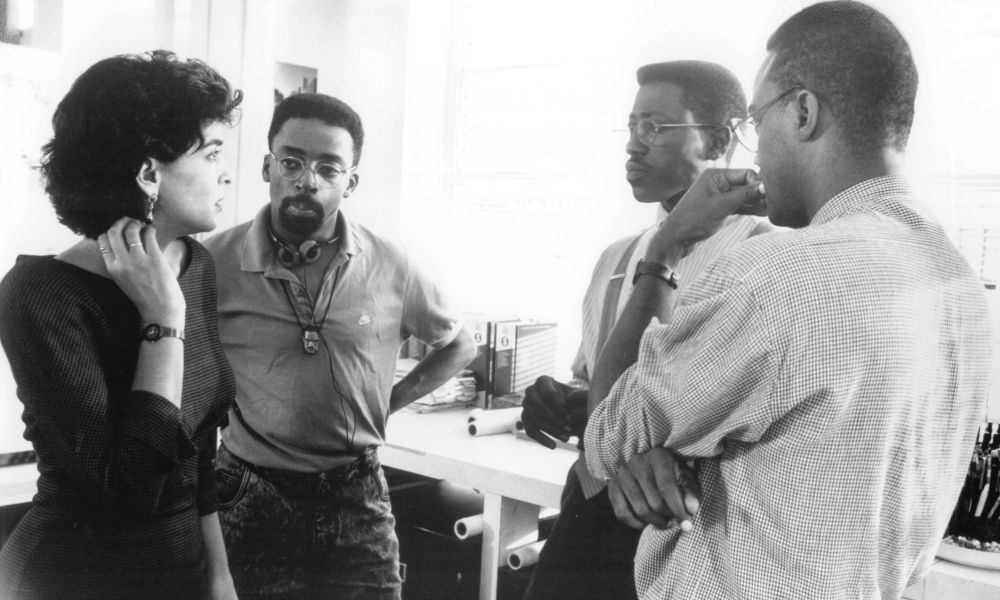
"The most significant turning point in black cinema was the emergence of Spike Lee, whose films explored a hitherto unknown range of themes from a black perspective. It was black directors like Melvin Van Peebles, Gordon Parks, and Sidney Poitier in the 1970s who paved the way for Spike Lee in the following decade. But whereas their films catered mainly for black audiences, Lee's appealed to a wider spectrum of society." - Ronald Bergan (Eyewitness Companions: Film, 2006)
Spike Lee
Director / Producer / Screenwriter / Actor
(1957- ) Born March 20, Atlanta, Georgia, USA
Top 250 Directors / 21st Century's Top 100 Directors
(1957- ) Born March 20, Atlanta, Georgia, USA
Top 250 Directors / 21st Century's Top 100 Directors
Key Production Country: USA
Key Genres: Drama, Urban Drama, Comedy, Ensemble Film, Documentary, Message Movie, Crime Drama, Comedy Drama, Biography, Romance, Urban Comedy, Race & Ethnicity
Key Collaborators: Terence Blanchard (Composer), Barry Alexander Brown (Editor), Wynn Thomas (Production Designer), Jon Kilik (Producer), Ellen Kuras (Cinematographer), Ernest Dickerson (Cinematographer), Samuel D. Pollard (Editor), Ossie Davis (Character Actor), John Turturro (Character Actor), Thomas Jefferson Byrd (Leading Character Actor), Denzel Washington (Leading Actor), Delroy Lindo (Leading Actor)
Key Genres: Drama, Urban Drama, Comedy, Ensemble Film, Documentary, Message Movie, Crime Drama, Comedy Drama, Biography, Romance, Urban Comedy, Race & Ethnicity
Key Collaborators: Terence Blanchard (Composer), Barry Alexander Brown (Editor), Wynn Thomas (Production Designer), Jon Kilik (Producer), Ellen Kuras (Cinematographer), Ernest Dickerson (Cinematographer), Samuel D. Pollard (Editor), Ossie Davis (Character Actor), John Turturro (Character Actor), Thomas Jefferson Byrd (Leading Character Actor), Denzel Washington (Leading Actor), Delroy Lindo (Leading Actor)
"Never far from holding a mirror up to his own life's experience, virtually all Lee's films reflect on his family, his upbringing, the creative professions, New York City, and being a wicked smart African-American artist in a whitewashed world. The themes of autobiography and race quickly become useful for understanding Lee's work... Since Lee's career shift to being a more ambitious producer, his work has been uneven. Certain projects are fantastically good, and sometimes commercially successful, whereas others are disastrous, from conception to execution, eliciting shrugs of confusion that someone so great might be brought so low." - Garrett Chaffin-Quiray (501 Movie Directors, 2007)
"If Lee is best known for his sometimes provocative studies of racial prejudice and conflict, the value of his films arguably lies less in political commentary (which can tend towards the simplistic) than in his having given a cinematic voice to contemporary African-Americans. Not only is he adept at portraying the fabric, texture and sheer variety of the black American experience but his style, often neglected in favour of the films' content, is idiosyncratic and assured." - Geoff Andrew (The Director's Vision, 1999)
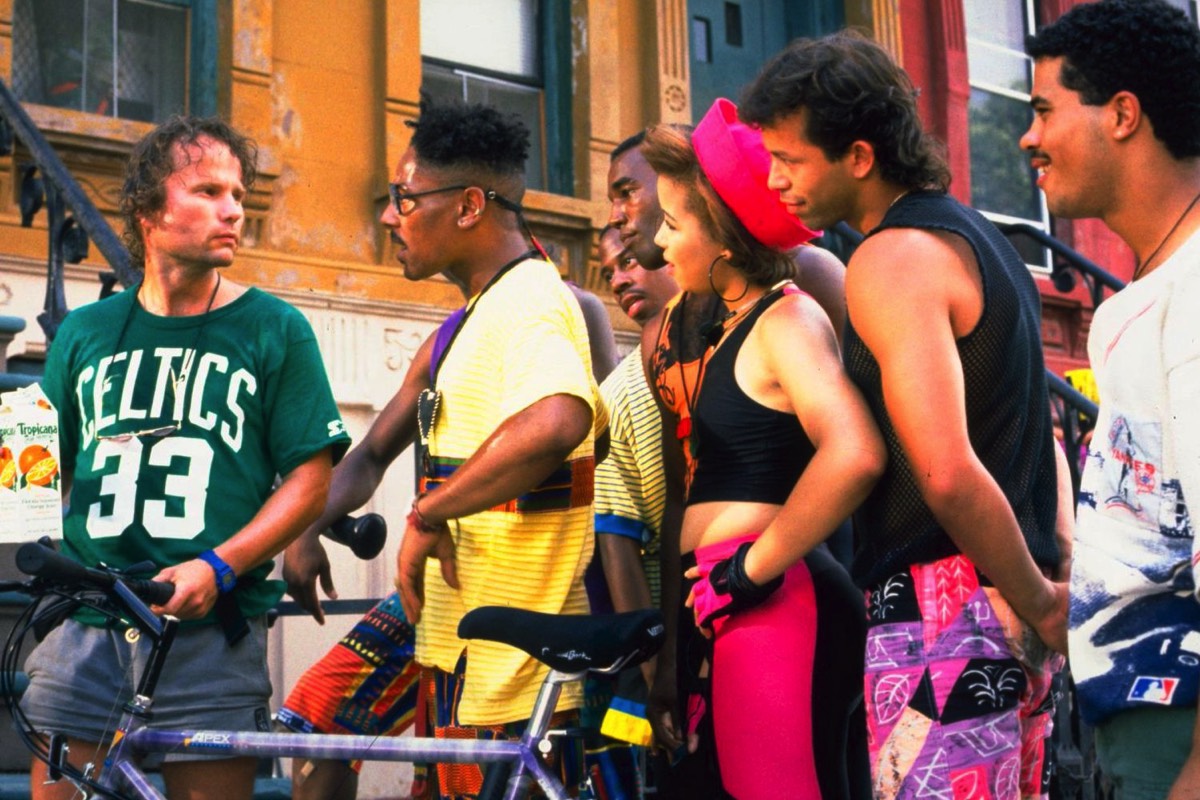
Do the Right Thing (1989)
"The great thing about Lee is that he has not tired or faltered. The question mark still hangs over the degree of his talent... He is capable, I think, of a great film about New York - and it might be better if he saw that as his subject and let the responsibility of being the best black director around look after itself." - David Thomson (The New Biographical Dictionary of Film, 2002)
"Leading American maker of street-level social dramas, whose narrative skills are sometimes undercut by seemingly racist (anti-white) attitudes. Having said that, Lee's films, in which he himself often plays featured roles, are frequently inspired by real events... His films, to many of which jazz forms an important background ingredient, are challenging, thought-provoking and in-your-face, sometimes too simplistic, but never taking the easy option, nor offering any ready resolution to the racial oppression which Lee sees all over America." - David Quinlan (Quinlan's Film Directors, 1999)
"Combining political energy, a bold formalist style, perceptive use of music and sound commercial skills, Spike Lee has established himself as a vital figure in contemporary US film culture. Moreover, Lee is in some ways the most visible symbol of a vibrant and evolving African-American film culture that extends from the mainstream to the experimental." - Yvonne Tasker (Fifty Contemporary Filmmakers, 2002)
"Exploring all aspects of black culture and history, he has combined provocative social comment with stylish film-making." - Chambers Film Factfinder, 2006
"In many ways an unprepossessing and rather vainglorious figure, Lee has real talent hidden beneath his agitprop facade. Malcolm X (1992) is a superb meditation on commitment, but its very success shows the rest of Lee's films up in a poorer light." - Mario Reading (The Movie Companion, 2006)
"The USA's foremost black film-maker, Spike Lee effectively opened up new avenues for black directors through the example of his persistence and his talent... Lee has frequently been criticised for his 'political naïveté', for example his anti-semitism in Mo' Better Blues (1990). In response, he has hit back at the white movie establishment, and says he will not be diverted from his commitment to documenting the Afro-American experience." - The Movie Book, 1999
"The first black filmmaker to exploit the new opportunities was Spike Lee. Lee made a distinctive debut with an independent feature, She’s Gotta Have It (1986), a film shot in twelve days… Later films continued his exploration of controversial issues in race relations, with an eclectic visual and narrative style combining realist and anti-realist techniques." - Robert Sklar (Film: An International History of the Medium, 1993)
"Spike Lee is the most famous African American to have succeeded in breaking through industry obstacles to create a notable career for himself as a major director. What makes this all the more notable is that he is not a comedian—the one role in which Hollywood has usually allowed blacks to excel—but a prodigious, creative, multifaceted talent who writes, directs, edits, and acts, a filmmaker who invites comparisons with American titans like Woody Allen, John Cassavetes, and Orson Welles. His films, which deal with different facets of the black experience, are innovative and controversial even within the black community. Spike Lee refuses to be content with presenting blacks in their ‘‘acceptable’’ stereotypes: noble Poitiers demonstrating simple moral righteousness are nowhere to be found. Lee’s characters are three dimensional and often vulnerable to moral criticism." - Charles Derry (International Dictionary of Film and Filmmakers, 2000)
"When I was becoming a filmmaker I knew it would be harder for me to be a black filmmaker—to be a filmmaker because I was black. But I realized that you just have to be two or three-four times better. The same thing as any black athlete. They got to be better than the white boy to make the team. You don’t sit there and brood about it. This is something you just know, growing up black. It’s a given. The problem starts when people say that’s a given and then use that as the excuse." - Spike Lee (Film Comment, 1989)
Selected Filmography
Loading filmography...
GF Greatest Films ranking (★ Top 1000 ● Top 2500)
21C 21st Century ranking (☆ Top 1000)
T TSPDT R Jonathan Rosenbaum S Martin Scorsese
21C 21st Century ranking (☆ Top 1000)
T TSPDT R Jonathan Rosenbaum S Martin Scorsese
Spike Lee / Favourite Films
The Battle of Algiers (1965) Gillo Pontecorvo, Bicycle Thieves (1948) Vittorio De Sica, Black Orpheus (1959) Marcel Camus, Blue Collar (1978) Paul Schrader, Chinatown (1974) Roman Polanski, Close Encounters of the Third Kind (1977) Steven Spielberg, Cool Hand Luke (1967) Stuart Rosenberg, Dog Day Afternoon (1975) Sidney Lumet, Hoop Dreams (1994) Steve James, The Last Detail (1973) Hal Ashby, Mean Streets (1973) Martin Scorsese, Stranger Than Paradise (1984) Jim Jarmusch, To Kill a Mockingbird (1962) Robert Mulligan, The Train (1965) John Frankenheimer, West Side Story (1961) Robert Wise & Jerome Robbins.
Source: Details (2012)
The Battle of Algiers (1965) Gillo Pontecorvo, Bicycle Thieves (1948) Vittorio De Sica, Black Orpheus (1959) Marcel Camus, Blue Collar (1978) Paul Schrader, Chinatown (1974) Roman Polanski, Close Encounters of the Third Kind (1977) Steven Spielberg, Cool Hand Luke (1967) Stuart Rosenberg, Dog Day Afternoon (1975) Sidney Lumet, Hoop Dreams (1994) Steve James, The Last Detail (1973) Hal Ashby, Mean Streets (1973) Martin Scorsese, Stranger Than Paradise (1984) Jim Jarmusch, To Kill a Mockingbird (1962) Robert Mulligan, The Train (1965) John Frankenheimer, West Side Story (1961) Robert Wise & Jerome Robbins.
Source: Details (2012)
Spike Lee / Fan Club
David Sterritt, Matt Zoller Seitz, Zach Ralston, Odie Henderson, Carrie Rickey, Roger Ebert, David Lowery, Michael Sicinski, Steve McQueen, Akin Omotoso, John Nesbit, Brian Tallerico.
David Sterritt, Matt Zoller Seitz, Zach Ralston, Odie Henderson, Carrie Rickey, Roger Ebert, David Lowery, Michael Sicinski, Steve McQueen, Akin Omotoso, John Nesbit, Brian Tallerico.
"Fan Club"
These film critics/filmmakers have, on multiple occasions, selected this director’s work within film ballots/lists that they have submitted.
These film critics/filmmakers have, on multiple occasions, selected this director’s work within film ballots/lists that they have submitted.