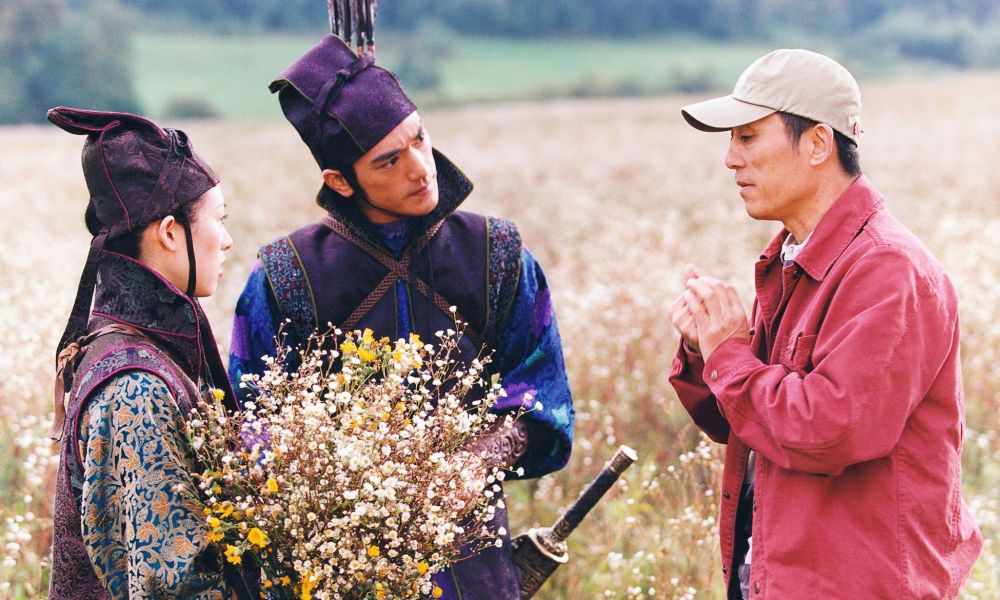
"His great strength is his mastery of filmmaking technique: photography, set design, use of sound an color are always vivid and impeccable. As a narrator, he favours complex, tragic melodramas that plot the shifting center of power and control in human relations." - The Macmillan International Film Encyclopedia, 1994
Zhang Yimou
Director / Producer / Screenwriter / Cinematographer
(1951- ) Born November 14, Xi'an, Shaanxi, China [some sources state April 2, 1950 or November 14, 1950 as Zhang Yimou's birthdate]
Top 250 Directors
(1951- ) Born November 14, Xi'an, Shaanxi, China [some sources state April 2, 1950 or November 14, 1950 as Zhang Yimou's birthdate]
Top 250 Directors
Key Production Countries: China, Hong Kong
Key Genres: Drama, Period Film, Rural Drama, Martial Arts, Romantic Drama, Marriage Drama, Comedy Drama, Coming-of-Age, Family Drama, Action, Historical Film, Comedy
Key Collaborators: Du Yuan (Editor), Cao Juiping (Production Designer), Gong Li (Leading Actress), William Kong (Producer), Zhao Jiping (Composer), Zhao Xiaoding (Cinematographer), Lü Yue (Cinematographer), Cheng Long (Editor), Zhai Ru (Editor), Huo Tingxiao (Production Designer), Wen Jiang (Leading Actor), Zhang Ziyi (Leading Actress)
Key Genres: Drama, Period Film, Rural Drama, Martial Arts, Romantic Drama, Marriage Drama, Comedy Drama, Coming-of-Age, Family Drama, Action, Historical Film, Comedy
Key Collaborators: Du Yuan (Editor), Cao Juiping (Production Designer), Gong Li (Leading Actress), William Kong (Producer), Zhao Jiping (Composer), Zhao Xiaoding (Cinematographer), Lü Yue (Cinematographer), Cheng Long (Editor), Zhai Ru (Editor), Huo Tingxiao (Production Designer), Wen Jiang (Leading Actor), Zhang Ziyi (Leading Actress)
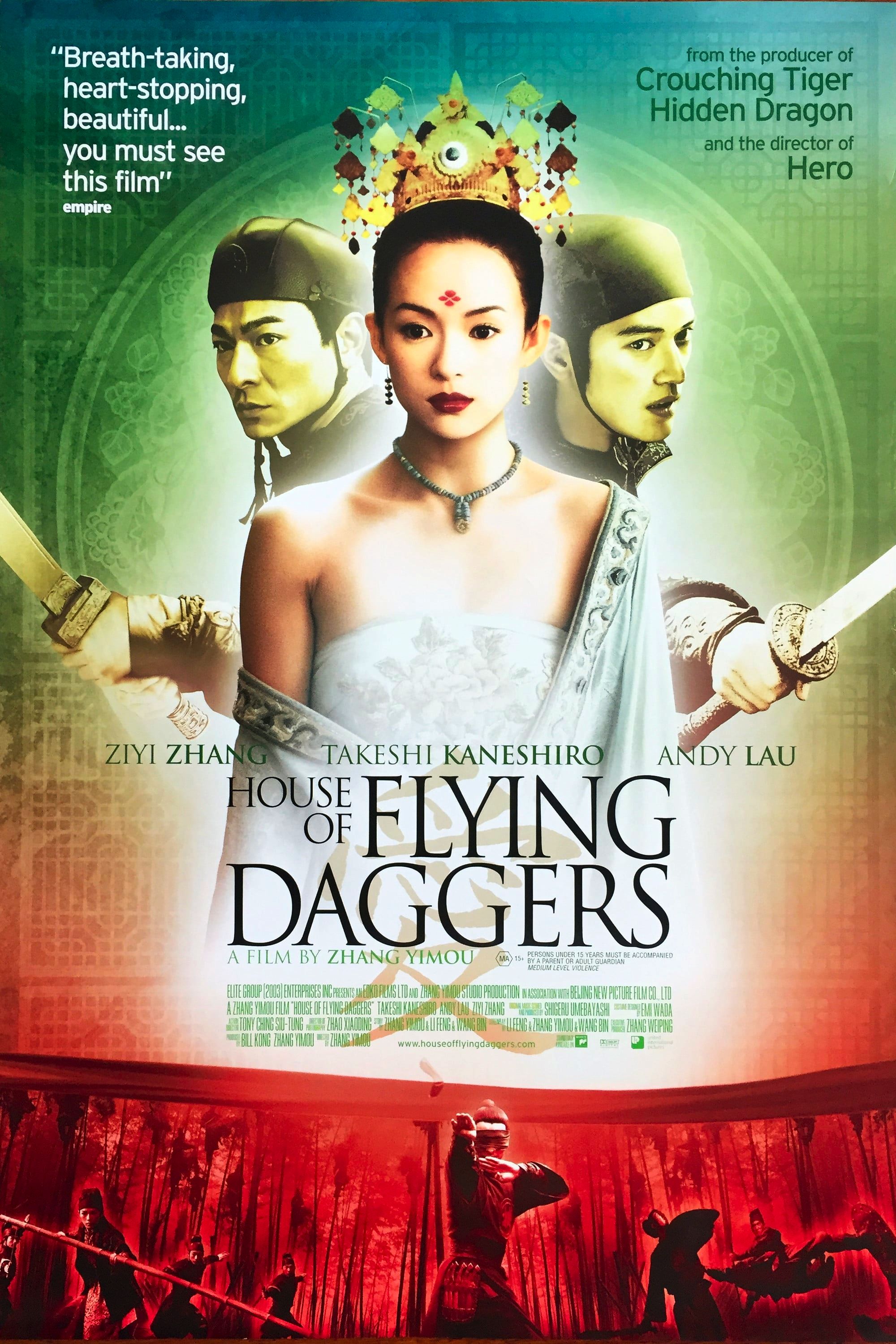
"Known for his intimate personal dramas and lavish action period pieces, Yimou Zhang is one of the most prominent and critically acclaimed directors to emerge from the Fifth Generation of Chinese filmmakers who began making films after the Cultural Revolution... Recently, Zhang made a major directorial shift with the period wushu martial arts films Hero (2002), House of Flying Daggers (2004), and Curse of the Golden Flower (2006). Although they retain Zhang's visual storytelling artistry, with its trademark use of flamboyant color as a motif, extravagant costumes, and graceful action sequences, the films drew criticism for glamorizing Eastern society for Western consumption." - William Sean Wilson (501 Movie Directors, 2007)
"His early films were often suppressed by the Chinese authorities for political reasons, despite finding critical favour abroad. He is now one of the best-known and most influential members of China's Fifth Generation movement, a group of directors whose careers began after the Cultural Revolution; he has recently become known for lavish, digitally-enhanced historical action epics that showcase his love of dramatic, colourful visuals." - Chambers Film Factfinder, 2006
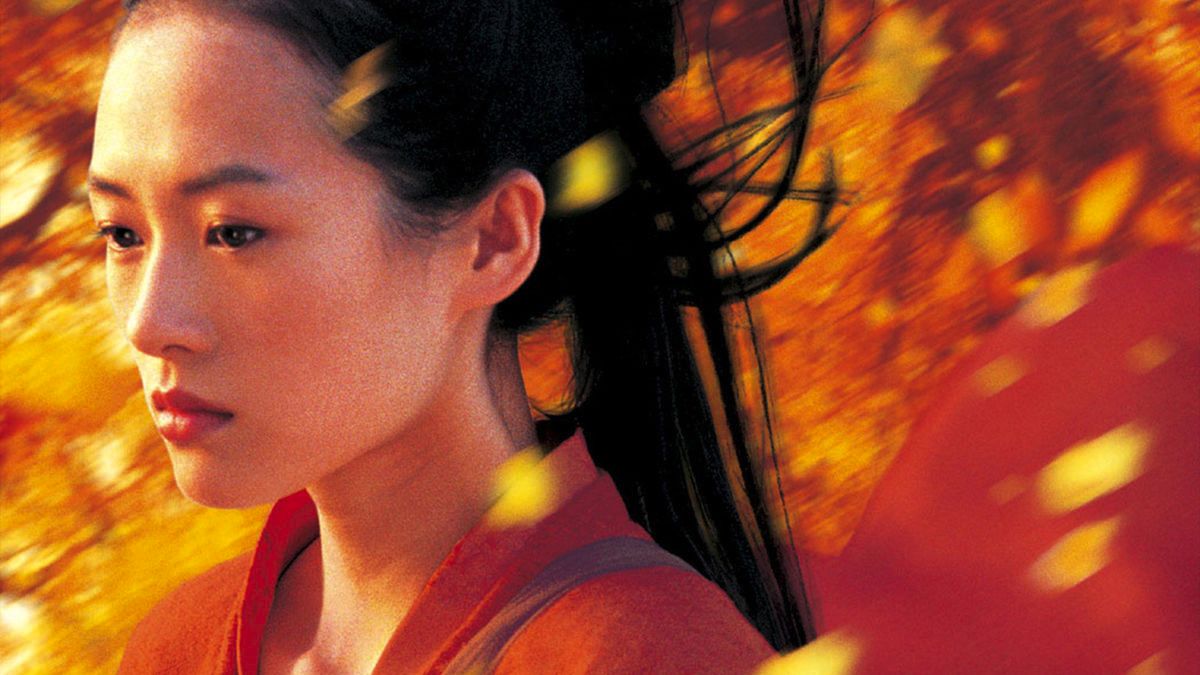
Hero (2002)
"Zhang Yimou's strengths are many: he has a command of intricate, quick narratives all the more surprising in that he sometimes dwells on shots or scenes - but complexities mount up very rapidly (as in the development of the brutal son in Ju Dou); he is as great a director of interiors as Ozu or Mizoguchi - the dye works in Ju Dou and the household in Raise the Red Lantern become superb stages for the melodrama; and he has Gong Li as his actress." - David Thomson (The New Biographical Dictionary of Film, 2002)
"His propensity for visual display has been fiercely criticised in China for its exoticism and lack of historical authenticity. However, Zhang does not claim that his films document China or its people; he creates fictional worlds through moving images that often defamiliarise, shock, seduce, and subvert. He documents desire instead, circulating themes that have long haunted the national psyche and using seductive image-ideas that marry reality, dream and nightmare." - Mary Farquhar (Senses of Cinema, 2002)
"Among the first post-Mao film school graduates, Zhang Yimou dares to express moral ambiguity and an implicit reaction against authority in his films. Reacting against the propagandist films he was subjected to in his youth, former cameraman Zhang recalled that at film school, "we swore... we would never make films like that." - Ronald Bergan (Film - Eyewitness Companions, 2006)
"Given the decade he spent as a laborer, it comes as little surprise that Zhang Yi-Mou's films are rich, colorful, epic, dramatic tributes to the forbearance and integrity of everyday Chinese people, both contemporary and historic." - Jerome Szymczak (The St. James Film Directors Encyclopedia, 1998)
"A fine director and cinematographer, Zhang has been consistently harassed by the Chinese authorities for his perceived criticism of the state apparatus. His first feature, Red Sorghum (1987), showed intense visual and intellectual promise, something borne out by his succeeding features, Ju-Dou (1990), the brilliant Raise the Red Lantern (1991), and To Live (1994)." - Mario Reading (The Movie Companion, 2006)
"I do not feel that it is enough if you just want to make something so that it will be popular. I have to express what I want to say. I probably would refuse to make such a film." - Zhang Yimou (Offscreen, 1998)
"There are many directors who have influenced me. I’m a real film buff. Going to the movies is my only habit. So when I see any great work, that great work will become my new model. I don’t believe anybody was a born filmmaker; we all have to learn from the past. As for the Italian Neo-Realism, it was the one in school that we watched a lot when we were in college. Obviously it interests me a great deal." - Zhang Yimou (IndieWire, 2002)
Selected Filmography
Loading filmography...
Zhang Yimou / Fan Club
Jerry Schatzberg, Mike D'Angelo, Julie Dash, Asif Kapadia, Mela Marquez, Han Jie, Diego Galán, Zach Ralston, Michael Wilmington, Hany Abu-Assad, David Sterritt, Briony Hanson.
Jerry Schatzberg, Mike D'Angelo, Julie Dash, Asif Kapadia, Mela Marquez, Han Jie, Diego Galán, Zach Ralston, Michael Wilmington, Hany Abu-Assad, David Sterritt, Briony Hanson.
"Fan Club"
These film critics/filmmakers have, on multiple occasions, selected this director’s work within film ballots/lists that they have submitted.
These film critics/filmmakers have, on multiple occasions, selected this director’s work within film ballots/lists that they have submitted.