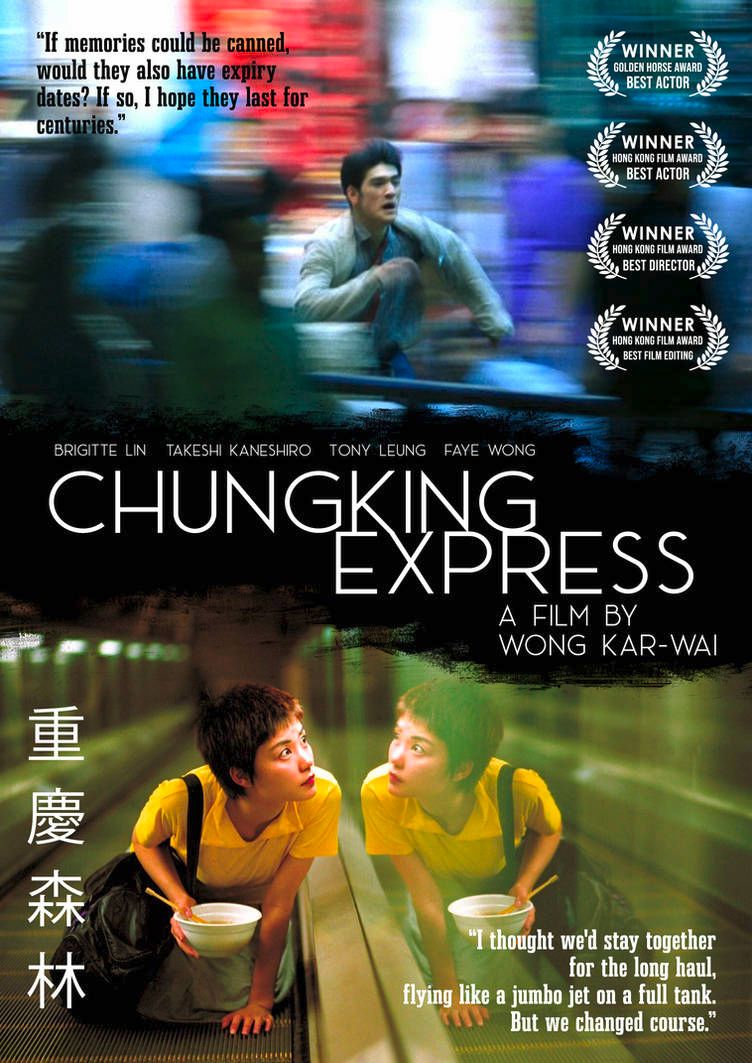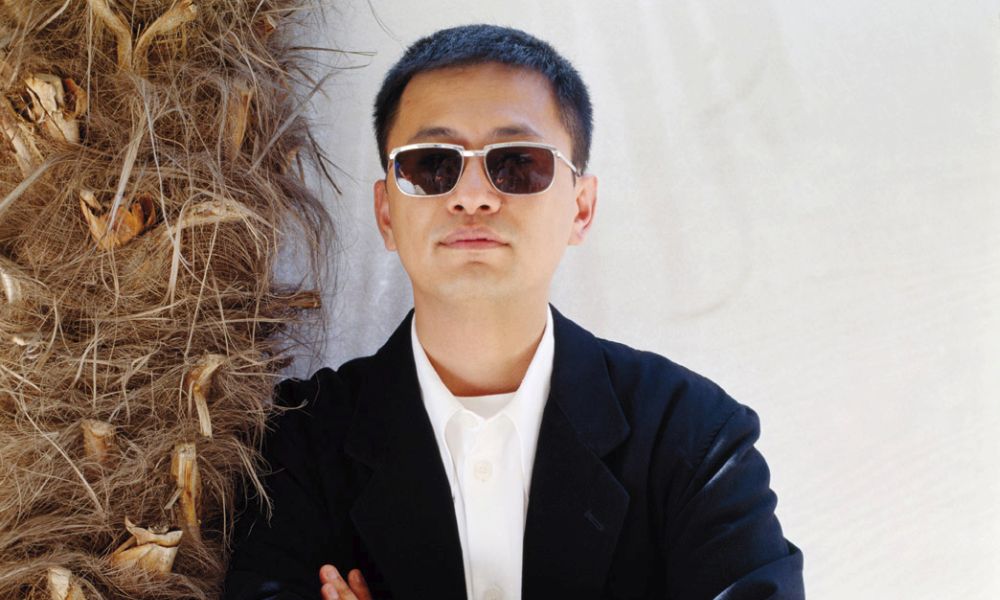
"The dull ache of stolen moments and passing time weighs heavily on the Hong Kong art-house sensualist Wong Kar-wai, whose Proust-like evocations of memory and regret have attained the status of fetish objects amongst his slavish international fan base." - Andrew Bailey (Cinema Now, 2007)
Wong Kar-wai
Director / Screenwriter / Producer
(1956- ) Born July 17, Shanghai, China
Top 250 Directors / 21st Century's Top 100 Directors
(1956- ) Born July 17, Shanghai, China
Top 250 Directors / 21st Century's Top 100 Directors
Key Production Countries: Hong Kong, China, France
Key Genres: Drama, Romantic Drama, Romance, Urban Drama, Gangster Film, Period Film, Martial Arts
Key Collaborators: William Chang (Production Designer/Editor), Christopher Doyle (Cinematographer), Tony Leung (Leading Actor), Maggie Cheung (Leading Character Actress), Jacky Pang Yee Wah (Producer), Kwan Pun-Leung (Cinematographer), Leslie Cheung (Leading Actor), Jeffrey Lau (Producer), Kai Kit-Wai (Editor), Jacky Cheung (Leading Character Actor), Chen Chang (Leading Character Actor), Carina Lau (Leading Character Actress)
Key Genres: Drama, Romantic Drama, Romance, Urban Drama, Gangster Film, Period Film, Martial Arts
Key Collaborators: William Chang (Production Designer/Editor), Christopher Doyle (Cinematographer), Tony Leung (Leading Actor), Maggie Cheung (Leading Character Actress), Jacky Pang Yee Wah (Producer), Kwan Pun-Leung (Cinematographer), Leslie Cheung (Leading Actor), Jeffrey Lau (Producer), Kai Kit-Wai (Editor), Jacky Cheung (Leading Character Actor), Chen Chang (Leading Character Actor), Carina Lau (Leading Character Actress)
"The New Wave of Asian cinema has produced several notably ambitious eccentrics and iconoclasts. That the inimitable and mysterious Kar Wai Wong still stands out as particularly distinctive underscores his unconventional approach and uniquely accomplished output… In the Mood for Love solidified his critical reputation as well as his established habits, foremost among them relying on largely improvised scripts and the impulsive camerawork of cinematographer Christopher Doyle." - Joshua Klein (501 Movie Directors, 2007)
"While the distinction between 'mainstream' and 'alternative' films had in fact always been rather blurred in Hong Kong, there was a second 'New Wave' in the 1990s, typified by the more experimental and idiosyncratic films of Wong Kar-Wai, aided and abetted by his equally creative Australian camera operator Chris Doyle (Ashes of Time, Chungking Express (both 1994)). In an age of media saturation and omnipresent video images, Wong's films questioned the very nature of cinema as cinema, and were perhaps suitable signs of the 'culture of disappearance' in pre-1997 Hong Kong." - Nathan Abrams, Ian Bell and Jan Udris (Studying Film, 2001)
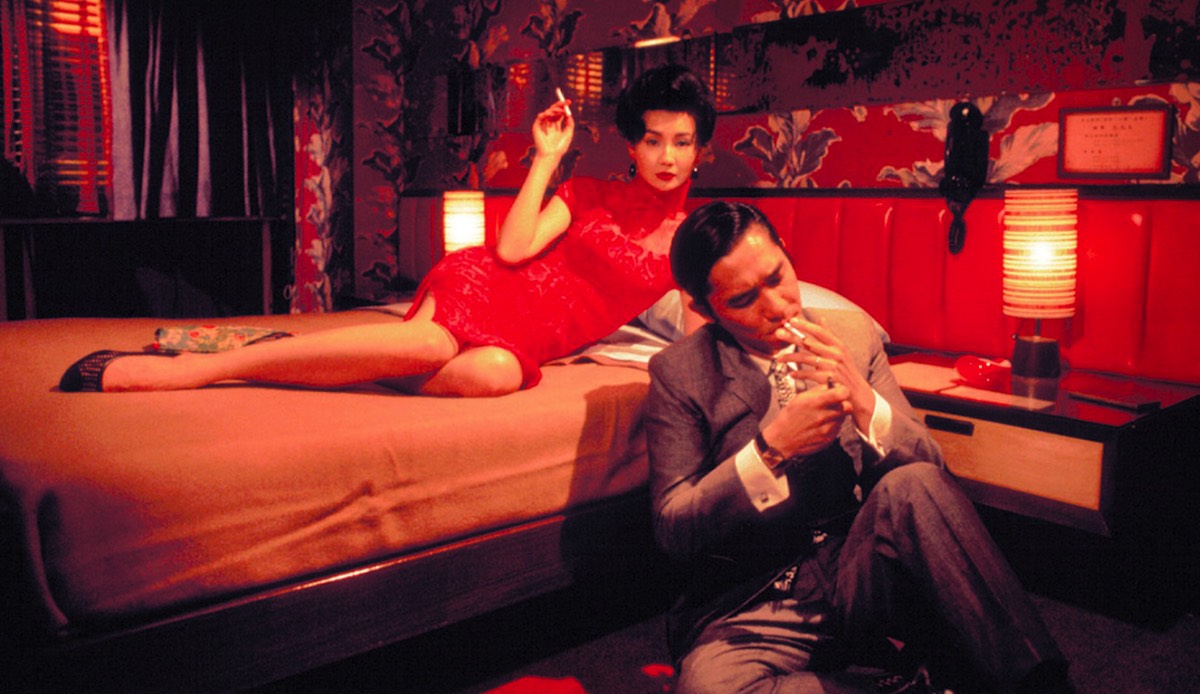
In the Mood for Love (2000)
"Wong’s avant-garde filmic aesthetic is composed of elliptical storytelling through the use of deeply drenched tones, slow motion, jump cuts and fragmented images. Although the notion of auteur is not entirely customary in Hong Kong where films are often shot quickly and marketed via their accessibility as popular entertainment, Wong’s status as auteur marks his position within Hong Kong cinema’s industrial environment and signifies his complete creative freedom and control of every facet of his films’ production." - Elizabeth Wright (Senses of Cinema)
"While a product of the fertile Hong Kong filmmaking community of the '90s, writer/director Wong Kar-wai did not traffic in the over-the-top action blowouts favored by the likes of John Woo and Tsui Hark. Instead, his films took their inspiration from the seminal work of Jean-Luc Godard and the French New Wave, painting idiosyncratic and romantic tales of the young and disenfranchised uniquely representative of the myriad cultural influences which distinguish his native land." - Jason Ankeny, All-Movie Guide
"Few modern directors display as much ambition and promise, and none is as thrillingly alert to the enduring poignancy of the passing moment or to the ever-fresh resonance of memory and unrequited desire." - Geoff Andrew (The Director's Vision, 1999)
"One of the most influential directors of the last few decades, Wong Kar-Wai has a signature style, a bristling neon aesthetic, that can be seen in films, adverts and music videos across the globe." - Lloyd Hughes (The Rough Guide to Film, 2007)
"Central to the contemporary Chinese cinema renaissance are the seven feature films made to date by young Hong Kong director Wong Kar-Wai. Attracting both cult and mainstream attention, these titles have established Wong as one of the key names in the West's pantheon of Asian filmmakers." - Julian Stringer (Fifty Contemporary Filmmakers, 2002)
"Usually I find that genre conventions get in the way of dealing with certain areas of character psychology, but one of my inspirations for Ashes of Time was The Searchers--a film which suggests how you can get inside an apparently opaque protagonist." - Wong Kar-wai
Selected Filmography
Loading filmography...
Wong Kar-wai / Favourite Films
Aparajito (1956) Satyajit Ray, Breathless (1960) Jean-Luc Godard, The End of Summer (1961) Yasujiro Ozu, Pather Panchali (1955) Satyajit Ray, Spring in a Small Town (1948) Fei Mu, Vertigo (1958) Alfred Hitchcock, The World of Apu (1959) Satyajit Ray.
Source: Newsweek (2008)
Aparajito (1956) Satyajit Ray, Breathless (1960) Jean-Luc Godard, The End of Summer (1961) Yasujiro Ozu, Pather Panchali (1955) Satyajit Ray, Spring in a Small Town (1948) Fei Mu, Vertigo (1958) Alfred Hitchcock, The World of Apu (1959) Satyajit Ray.
Source: Newsweek (2008)
Wong Kar-wai / Fan Club
Philippa Hawker, Long Tin Shum, Li Cheuk-to, Justin Chang, Ryan Swen, Michael Atkinson, Cameron Bailey, Nick James, Clare Stewart, Peter Howell, Carlos F. Heredero, Andreas Kilb.
Philippa Hawker, Long Tin Shum, Li Cheuk-to, Justin Chang, Ryan Swen, Michael Atkinson, Cameron Bailey, Nick James, Clare Stewart, Peter Howell, Carlos F. Heredero, Andreas Kilb.
"Fan Club"
These film critics/filmmakers have, on multiple occasions, selected this director’s work within film ballots/lists that they have submitted.
These film critics/filmmakers have, on multiple occasions, selected this director’s work within film ballots/lists that they have submitted.