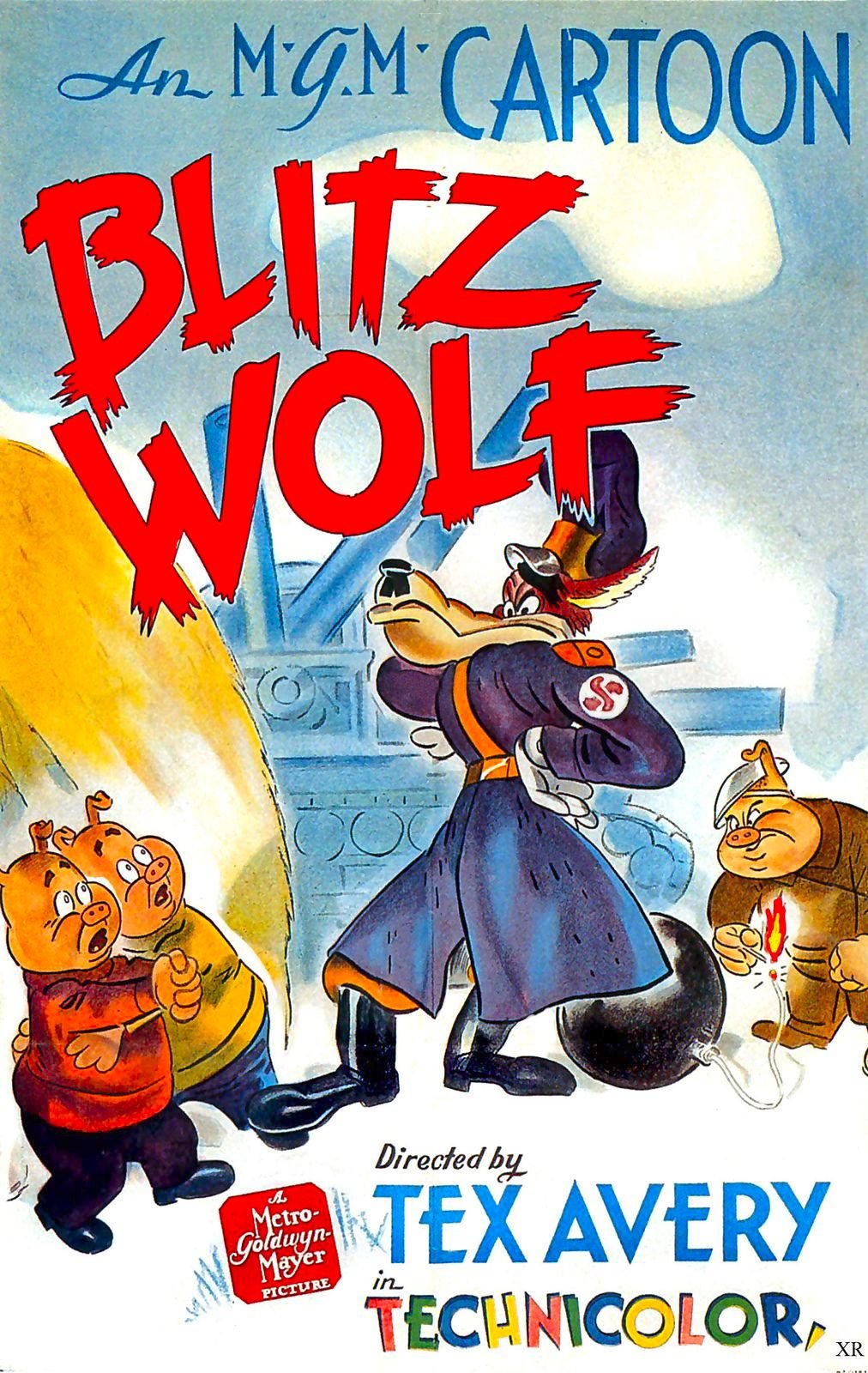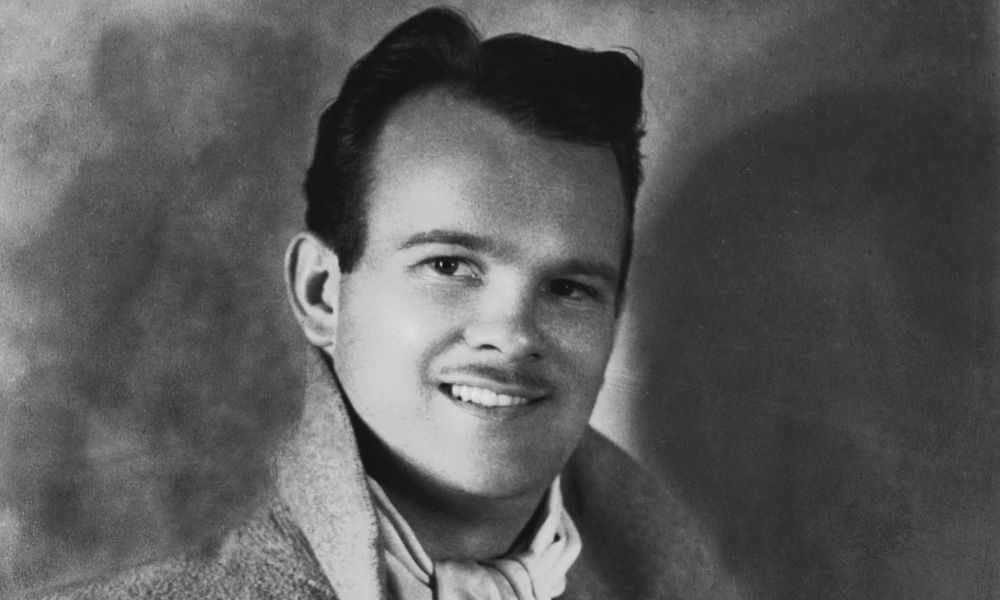
"First at Warners, then at MGM, Avery established himself as one of the most idiosyncratic, influential animation directors, with frantic shorts comprising relentlessly inventive series of visual and verbal gags… He favoured an anarchically exaggerated style centred on violent action and absurd representations of sexual excitement." - Geoff Andrew (The Director's Vision, 1999)
Tex Avery
Director / Animator / Voice Actor
(1908-1980) Born February 26, Taylor, Texas, USA
(1908-1980) Born February 26, Taylor, Texas, USA
Key Production Country: USA
Key Genres: Animation, Comedy, Short Film, Family, Adventure, Satire, Hand-Drawn Animation, Western, Music, Crime, Science Fiction, Slapstick
Key Collaborators: Scott Bradley (Composer), Fred Quimby (Producer), Heck Allen (Screenwriter), Rich Hogan (Screenwriter), Jim Faris (Editor), Fred MacAlpin (Editor), Sara Berner (Voice Actress), Daws Butler (Voice Actor), Pinto Colvig (Voice Actor), Frank Graham (Voice Actor), Bill Thompson (Voice Actor), William Hanna (Voice Actor)
Key Genres: Animation, Comedy, Short Film, Family, Adventure, Satire, Hand-Drawn Animation, Western, Music, Crime, Science Fiction, Slapstick
Key Collaborators: Scott Bradley (Composer), Fred Quimby (Producer), Heck Allen (Screenwriter), Rich Hogan (Screenwriter), Jim Faris (Editor), Fred MacAlpin (Editor), Sara Berner (Voice Actress), Daws Butler (Voice Actor), Pinto Colvig (Voice Actor), Frank Graham (Voice Actor), Bill Thompson (Voice Actor), William Hanna (Voice Actor)
“Began in cartoons with Charles Mitz and with Walter Lantz. Before 1940 he collaborated with Chuck Jones at Warner Brothers, where they invented Bugs Bunny. He was largely responsible for ferociously savage cartoons and for the characters "Chilly Willy", "Lucky Ducky", and "Droopy." Although he never abandoned the typical Disney animals and graphic design, he revolutionized cartoons with his ruthless, violent, anarchic sense of comic fantasy, often quasi-surrealistic. His films are typically based on a rhythmic chase and fight to the death.” - Georges Sadoul (Dictionary of Film Makers, 1972)
"His animations are as much a part of the famed Warner Brothers style as those proletariat roustabout movies of Cagney, Bogart, and Pat O’Brien, short on bombast and budget but high on energy, speed, inner-city urbanity, and sheer wit. Avery directed the first real Bugs Bunny cartoon, A Wild Hare (1940) and it was he who planted “What’s Up, Doc?” in Bugs’s repertoire. He invented Porky Pig and Daffy Duck (and later, elsewhere, Droopy and those bizarre bugs killed off in Raid commercials). He trained Bob Clampett and Chuck Jones as his animators (and Bob Cannon too, of UPA McBoing-Boing fame) and his influence on their work is immeasurable. To trace only one line, of many: Jerry Lewis learned his cartoonish visual style from the best director of Martin and Lewis vehicles, Frank Tashlin; and Tashlin, of course, learned to make live-action narratives by directing cartoons at Warners in the “wild and woolly” Avery tradition." - Ronnie Scheib (Screening the Past)
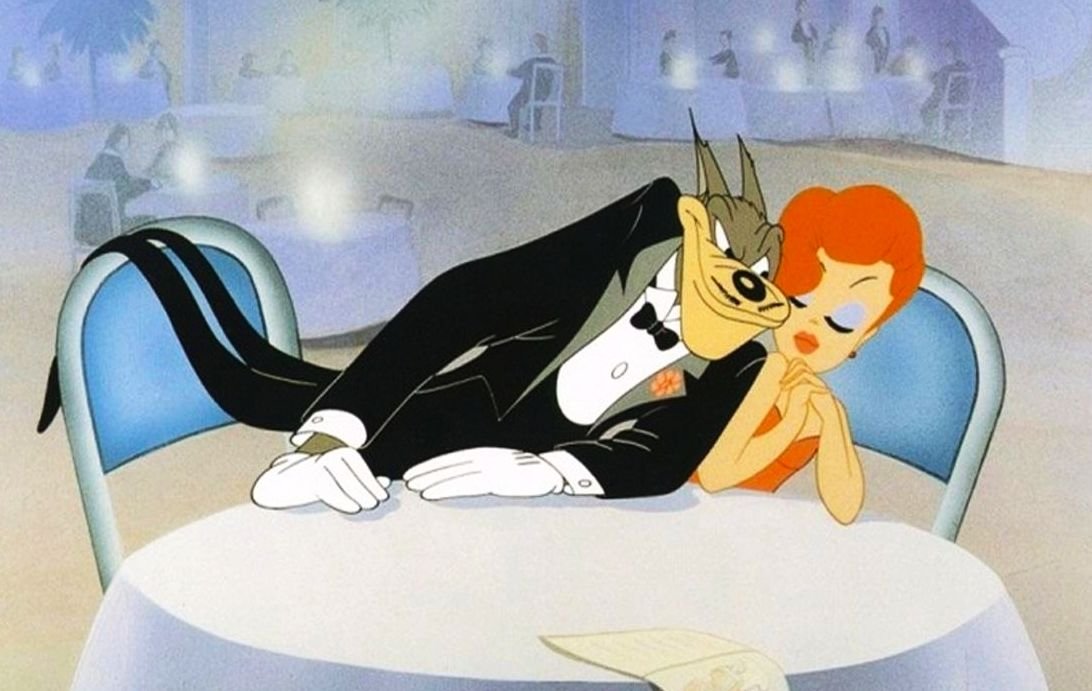
Red Hot Riding Hood (1943)
"After collaborating on many conventional cartoons, he developed at MGM an animation style in the 40s noted for its violence and freewheeling, almost surrealistic, fantasy… He exerted considerable influence on American animation, especially on the work of Friz Freleng, Chuck Jones, and Robert McKimson. From the late 50s he mostly made commercials." - The Film Encyclopedia, 2012
"Animation techniques we take for granted now, such as speed lines, breaking the fourth wall, emotionally-driven color changes, detachable body parts, defiance of the laws of physics – none of these were invented by Avery, but he took them, pushed them further than anyone had yet dared, and timed them in such rapid-fire succession that it was almost impossible not to laugh at something. He still wasn’t confident in his own draftsmanship, delegating layout drawings and designs to his unit, but as a director, he was exacting in his timing and humor." - William Fischer (Collider, 2022)
"Influential figure who directed some of Hollywood's finest animated films of the 1940s and 1950s, creating such memorable characters as Chilly-Willy the penguin and Droopy the dog. Avery's cartoons - often scripted by Heck Allen - offered a slightly more absurd and anarchic alternative to the work of his contemporaries Chuck Jones and Friz Freleng." - Robert A. Haller (The Virgin International Encyclopedia of Film, 1992)
"One of the primary innovators in American cartoon history, he helped forge the wacky 'house style' that came to be associated with Warner Bros… In 1941, Avery left Warners, helped devise the Speaking of Animals series, and then found a new home at MGM. Here his talent reached full flower, and his cartoons became more manic than ever." - Leonard Maltin's Movie Encyclopedia, 1995
"Fred 'Tex' Avery was the King of Cartoons: a free-wheeling anarchist who's distinctive sense of humor changed the face of U.S. animation forever. Generations later, his films can still reduce audiences to hysterics and inspire others cartoonists… Avery steered Warner Brothers' cartoons away from mild Disney mimicry into gag-addled joke fests with an addiction to speed. He refined Porky Pig, created Daffy Duck, dreamed up a nemesis for Daffy that would evolve into Elmer Fudd, and gave Bugs Bunny his trademark quip, "What's up, Doc?" - David Kalat (501 Movie Directors, 2007)
"A far greater cult figure in France than he is in the U.S.A., Avery was the supreme fantasist of cartoon animation, with many of his 1930s and 1940s shorts reaching almost surreal levels of macabre and ironical humour… Falsely described as a screwball stylist, Avery actually understood the attraction and cathartic effect of horror just as well as Bruno Bettelheim or the brothers Grimm, and his vital, sexy cartoons, stand up, to this day, as well as ever." - Mario Reading (The Movie Companion, 2006)
"Avery’s attitude toward animation was opposite that of Walt Disney, who favoured straightforward storytelling, classic draftsmanship, realistic narratives, and a live-action approach to the staging of action. By contrast, Avery celebrated the cartoon as a cartoon; his work never pretended to be anything but a drawing come to life. His films exhibited a love of exaggeration in his use of absurd gags presented at breakneck speed. An irreverence toward cinematic conventions pervades most of his animated films, as when characters comment on the action happening around them, sometimes by holding up a sign (“Silly, isn’t he?”) or by addressing the audience directly." - Encyclopaedia Britannica, 2020
Selected Filmography
Loading filmography...
Tex Avery / Fan Club
Jonathan Rosenbaum, Bernard Cohn, Daniel Caetano, Serge Bromberg.
Jonathan Rosenbaum, Bernard Cohn, Daniel Caetano, Serge Bromberg.
"Fan Club"
These film critics/filmmakers have, on multiple occasions, selected this director’s work within film ballots/lists that they have submitted.
These film critics/filmmakers have, on multiple occasions, selected this director’s work within film ballots/lists that they have submitted.