"Although not as well known outside Italy as his contemporaries—Federico Fellini, Luchino Visconti, Michelangelo Antonioni, Roberto Rossellini or Vittorio de Sica—Monicelli was one of the better comedic directors of post-World War II. His unflinching but empathetic cinematic portraits of ordinary people, along with his biting satirical observations of outdated and destructive social conventions, still resonate." - Richard Phillips (World Socialist Web Site, 2010)
Mario Monicelli
Director / Screenwriter
(1915-2010) Born May 16, Rome, Lazio, Italy
(1915-2010) Born May 16, Rome, Lazio, Italy
Key Production Countries: Italy, France
Key Genres: Comedy, Drama, History, Action-Adventure, Satire, Crime, Romance, Dark Comedy, Fantasy
Key Collaborators: Agenore Incrocci (Screenwriter), Furio Scarpelli (Screenwriter), Ruggero Mastroianni (Editor), Carlo Rustichelli (Composer), Vittorio Gassman (Leading Actor), Adriana Novelli (Editor), Lorenzo Baraldi (Production Designer), Alberto Sordi (Leading Actor), Franco Cristaldi (Producer), Folco Lulli (Leading Character Actor), Adolfo Celi (Leading Character Actor), Mario Garbuglia (Production Designer)
Key Genres: Comedy, Drama, History, Action-Adventure, Satire, Crime, Romance, Dark Comedy, Fantasy
Key Collaborators: Agenore Incrocci (Screenwriter), Furio Scarpelli (Screenwriter), Ruggero Mastroianni (Editor), Carlo Rustichelli (Composer), Vittorio Gassman (Leading Actor), Adriana Novelli (Editor), Lorenzo Baraldi (Production Designer), Alberto Sordi (Leading Actor), Franco Cristaldi (Producer), Folco Lulli (Leading Character Actor), Adolfo Celi (Leading Character Actor), Mario Garbuglia (Production Designer)
"After working on the scenarios for many post-war neo-realist films, he co-directed (with Steno) several comedies starring Totò. In the late 1950s he developed his own style of satirical, often black comedy with I Soliti Ignoti (1958), alternating with more serious social dramas such as I Compagni (1963), and episodes in various sketch films. L'Armata Brancaleone (1965), a stylish, beautifully-judged take off on costume and epic dramas showed his humour at his best, and was followed by several sequels. He has guided many of Italy's top players, including Vittorio Gassman and Marcello Mastroianni into giving their best comedy performances." - John Gillett (The International Encyclopedia of Film, 1972)
"Monicelli, who directed more than 60 films and wrote more than 70 screenplays, often drew comparisons to Balzac for the richness of his social canvas and for his sensitivity to the miseries and joys of Italian life. The foibles of ordinary Italians provided him with inexhaustible material in a career that lasted more than six decades and drew acclaimed performances from a galaxy of actors that included Marcello Mastroianni, Vittorio Gassman, Alberto Sordi and Monica Vitti." - William Grimes (The New York Times, 2010)
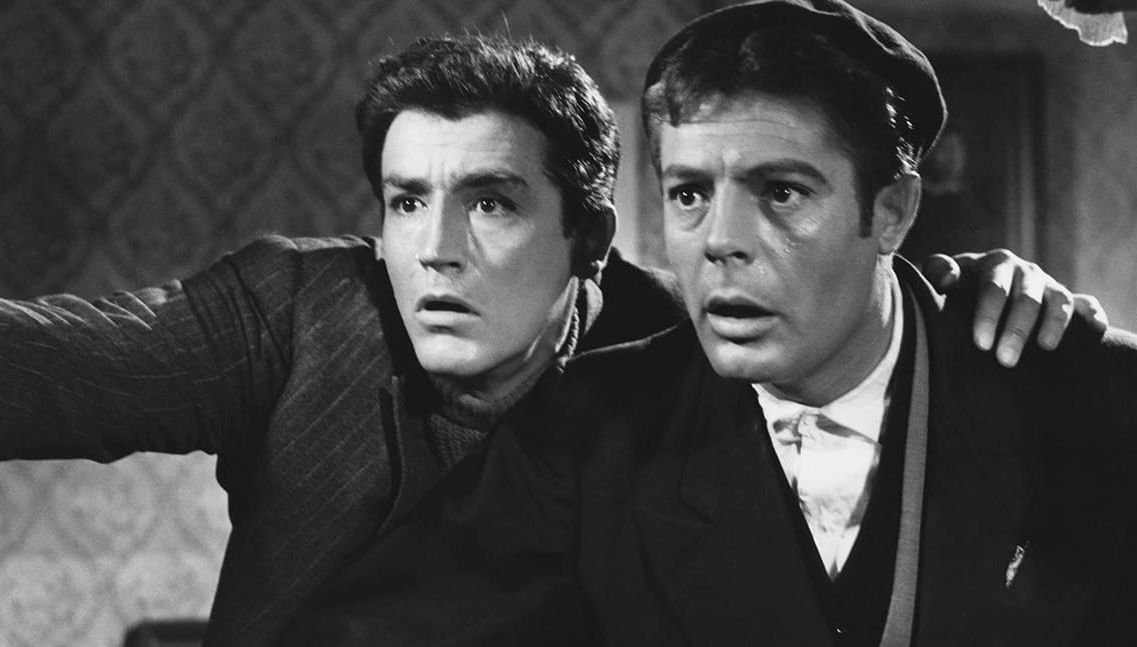
Big Deal on Madonna Street (1958
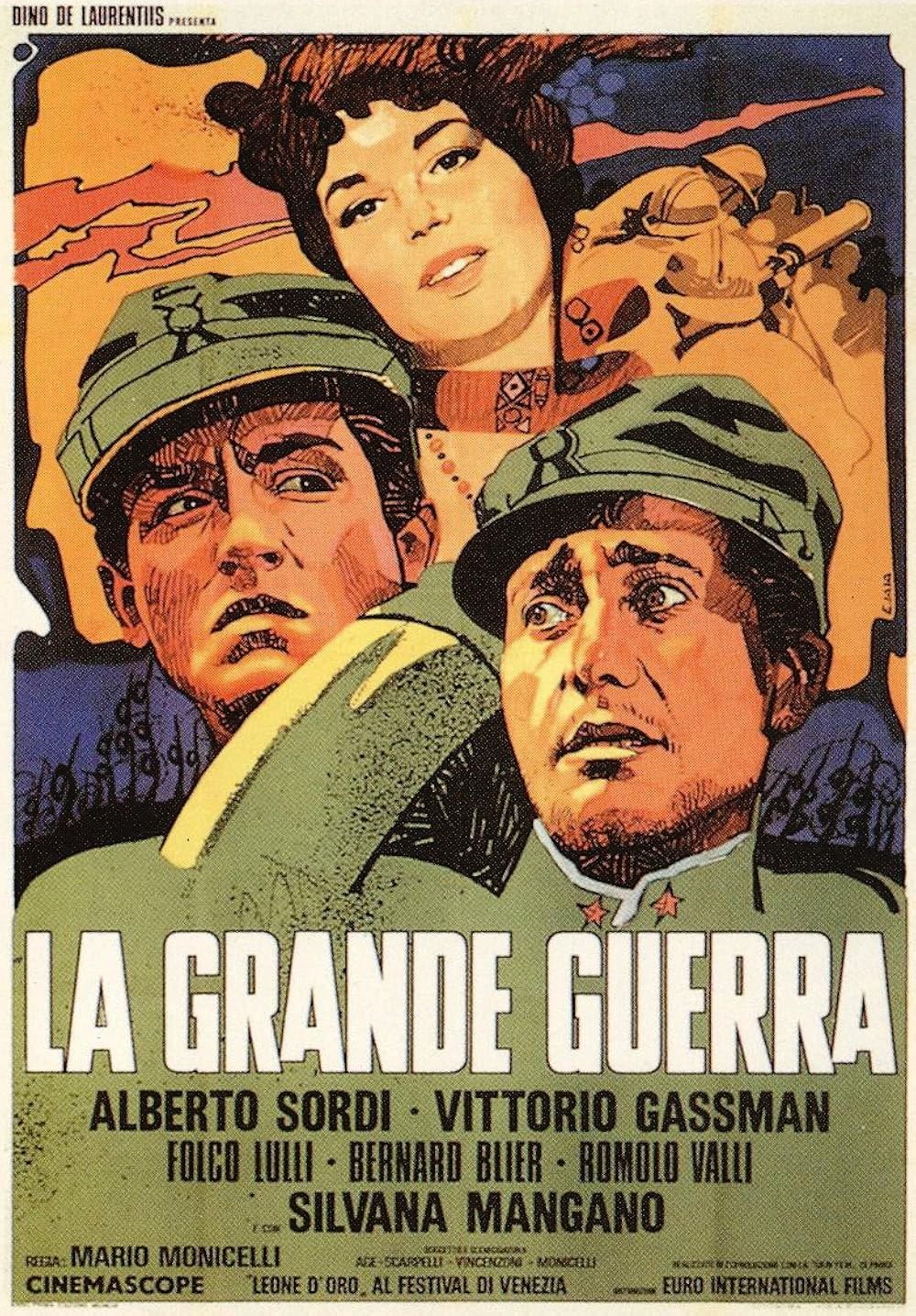
"His most important films, while flattering audiences' tastes, were also moved by an acute - even fierce - critical spirit. In 1959 La grande guerra/The Great War shared the Golden Lion at the Venice Festival with Roberto Rossellini's Il generale Della Rovere - the first time a popular and partly comic film was admitted to the ranks of art cinema. I compagni/The Strikers (1963) was an ambitious attempt to reclaim the history of the workers' and socialist movements in turn-of-the-century Turin. The film enjoyed some art-house success, especially abroad, but the general public in Italy was confused by its insertion of socio-political commitment into a basically entertainment genre. Monicelli had more success with a series of episode films, in particular L'armata Brancaleone (1965), starring an extraordinary Vittorio Gassman." - Paolo D'Agostini (Encyclopedia of European Cinema, 1995)
"In an interview from 1978, Monicelli revealed that, rather than Balzac, the overriding influence on films such as I soliti ignoti (Persons Unknown, 1958) or I compagni (The Strikers, 1963) was the work of another literary giant of the 19th century: Charles Dickens. In his laying bare of social injustices but also in his humour and characterisation, Dickens was very much the model for Monicelli’s often bitterly satirical work." - Pasquale Iannone (BFI, 2010)
"He has proved himself a master of satirical black comedy, notably in films such as The Great War (1959) and The Organizer (1963), and has elicited fine performances from some of Italy's best actors, notably Vittorio Gassman and Marcello Mastroianni. Monicelli also has a reputation for turning out uninspired commercial vehicles such as Casanova 70 (1965) and Lady Liberty (1972) in between his more 'personal' projects." - The Virgin International Encyclopedia of Film, 1992
"Mario Monicelli was for many Italians the director who best captured their national character. The genre that he largely founded — commedia all’italiana — charted and satirised the changing mores of the Fifties and Sixties, and the finest of his films remain the high watermark of a golden age of cinema. Monicelli once remarked that he only became a director because he lacked the skill to write novels as well as Dostoyevsky. His films shared with the Russian a compassionate eye for the downtrodden and their dreams, albeit Monicelli disguised his sentiments with caustic wit." - Alvaro Barrientos (The Times, 2010)
"Italian comedy is a type of comedy quite specific to Italy. The Italian comedy revolves around arguments and themes that are very dramatic, and sometimes tragic. So the theme is tragic, but the point of view is comical and humoristic. This is a type of comedy that grows precisely out of the fact that Italians see reality and life in this manner. But this goes way back, it surely isn’t something we invented. It comes from antique literature, from Boccaccio, from Commedia dell’Arte. The themes that make one laugh always stem from poverty, hunger, misery, old age, sickness, and death. These are the themes that make Italians laugh anyway. And the best one’s have always used these." - Mario Monicelli (Donato Totaro Interview, 1999)
Selected Filmography
Loading filmography...
Mario Monicelli / Favourite Films
The Dead (1987) John Huston.
Source: Sodankylä Ikuisesti: Desert Island Films (1996)
The Dead (1987) John Huston.
Source: Sodankylä Ikuisesti: Desert Island Films (1996)
Mario Monicelli / Fan Club
Whit Stillman, John Sayles, Fernando León de Aranoa, Maria do Rosário Caetano, Jean-Claude Romer, Bruno Bozzetto, Gian Luca Farinelli, Barthélemy Amengual, Martin Scorsese, Ricardo Bedoya, Joseph Fahim, Filipe Furtado.
Whit Stillman, John Sayles, Fernando León de Aranoa, Maria do Rosário Caetano, Jean-Claude Romer, Bruno Bozzetto, Gian Luca Farinelli, Barthélemy Amengual, Martin Scorsese, Ricardo Bedoya, Joseph Fahim, Filipe Furtado.
"Fan Club"
These film critics/filmmakers have, on multiple occasions, selected this director’s work within film ballots/lists that they have submitted.
These film critics/filmmakers have, on multiple occasions, selected this director’s work within film ballots/lists that they have submitted.