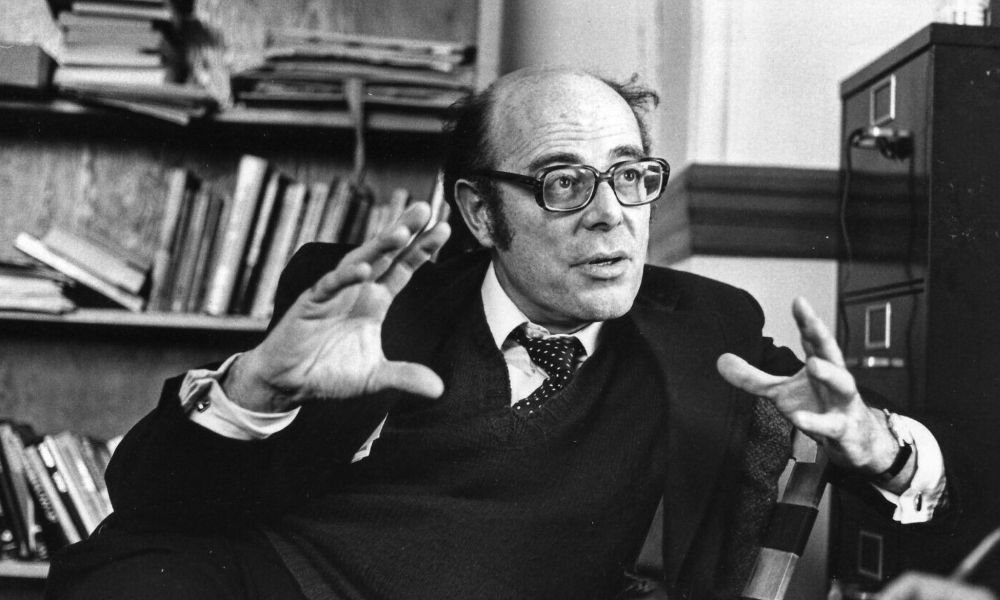
"Like his father, director Max Ophüls, Marcel Ophüls explores the nature of oppression and prejudice in his work. Rather than making fiction films, Marcel has concentrated on using the medium to document historical events and to disrupt people's complacency." - Roger Hagedorn (The Virgin International Encyclopedia of Films, 1992)
Marcel Ophüls
Director / Screenwriter / Producer
(1927-2025) Born November 1, Frankfurt am Main, Hesse, Germany
(1927-2025) Born November 1, Frankfurt am Main, Hesse, Germany
Key Production Countries: France, USA, Germany, Switzerland, UK
Key Genres: Documentary, War, History, Biography, Military & War, Politics & Government
Key Collaborators: Pierre Boffety (Cinematographer), Michael J. Davis (Cinematographer), Albert Jurgenson (Editor), Catherine Zins (Editor), Sophie Brunet (Editor)
Key Genres: Documentary, War, History, Biography, Military & War, Politics & Government
Key Collaborators: Pierre Boffety (Cinematographer), Michael J. Davis (Cinematographer), Albert Jurgenson (Editor), Catherine Zins (Editor), Sophie Brunet (Editor)
"Ophüls inherited none of the baroque style of his father Max Ophüls. His films (all documentaries apart from a successful comedy, Peau de Banane [1963], a thriller, Feu à volonté [1964] and a contribution to the multi-national Love at Twenty [1962]) owe nothing to embellishment and everything to a meticulous working method, perhaps attributable to an apprenticeship in television journalism. Assiduously researched, they are films assembled in the cutting-room from the raw material of numerous interviews. Dispensing with commentary and relying on people's willingness to be revealing about themselves in front of a camera, Ophüls constructs a kind of impressionist fresco which speaks volumes about the relationship of people and politics." - David Wilson (Cinema: A Critical Dictionary, 1980)
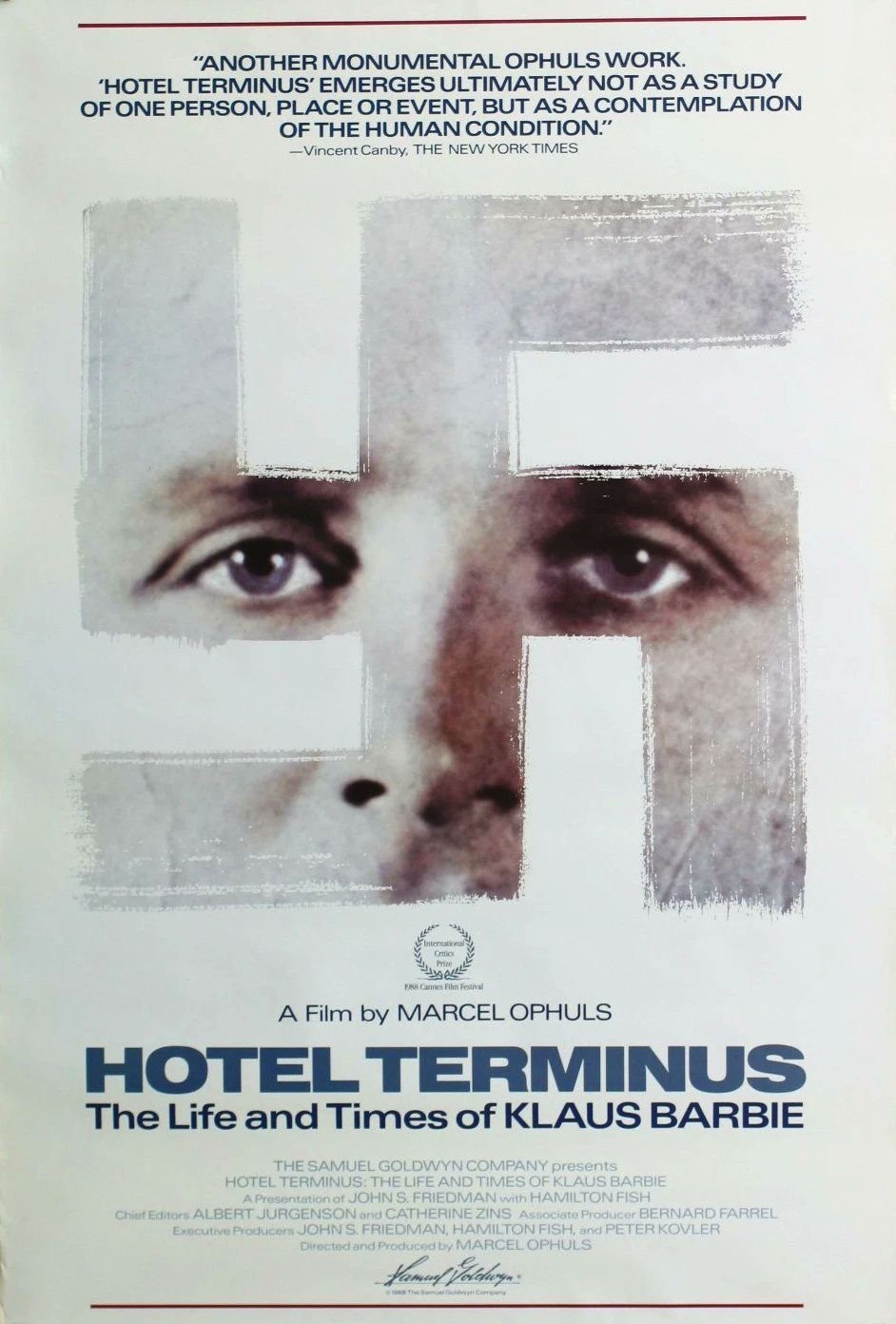
"Although Marcel Ophüls became a film director like his prodigious father, Max, he managed to avoid comparisons by taking the route of documentaries rather than fiction. Certainly, The Sorrow and the Pity (1969), his documentary on the behaviour of the citizens of the French city of Clermont-Ferrand during the second world war, and the Oscar-winning Hotel Terminus: The Life and Times of Klaus Barbie (1988), a detailed biography of the notorious Gestapo chief, put Ophuls on a level that made any reference to his father an irrelevance. Yet the cosmopolitan Max, who made his exquisite films in Germany, France, Hollywood and Italy, had a great influence on the life and personality of his son, if not the films." - Ronald Bergan (The Guardian, 2025)
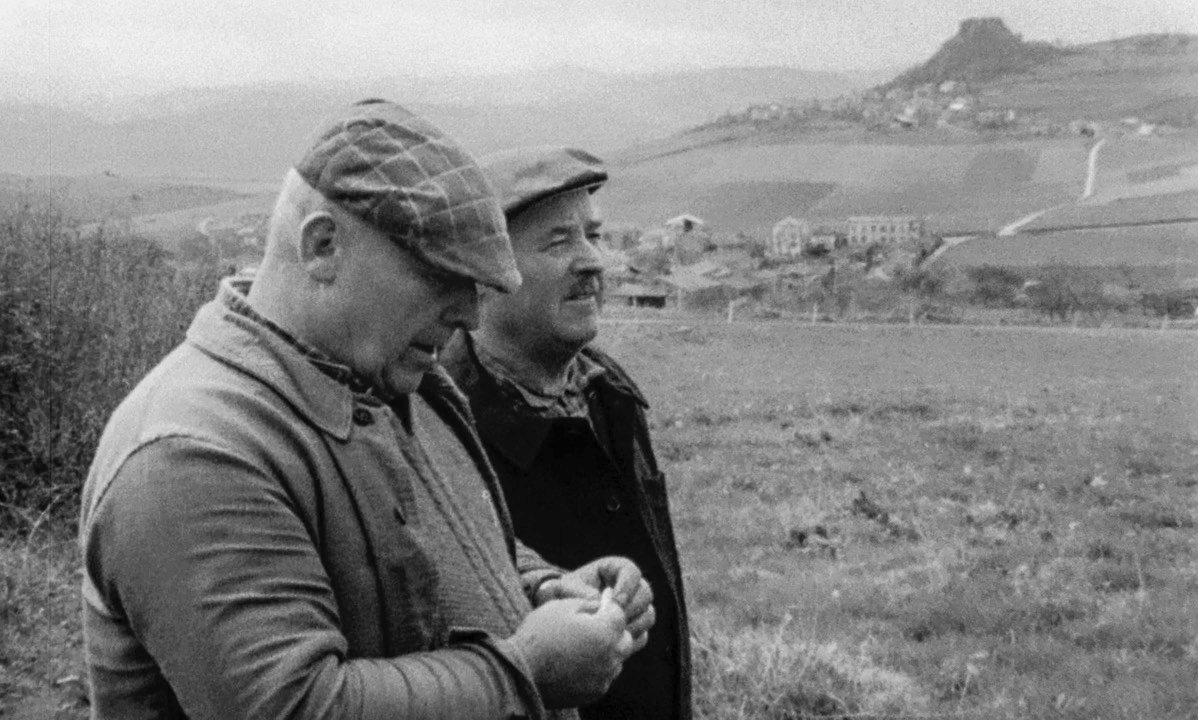
The Sorrow and the Pity (1969)
"The itinerant life Marcel Ophüls led as a child has surely affected the political and philosophical discrimination of most of his documentaries. Their chief target is nationalist confidence, and the crimes done in its name. Their obvious, but decent and hard-earned, message is for individual responsibility that will resist the surge of righteousness, especially when it calls itself manifest destiny. No personal ideological allegiance shows in Ophüls’s work. His pictures have the dogged tone and density of a lawyer’s self-examination. Stylistic flourishes and rhetorical ploys never occur to the dry conscience that produces them." - David Thomson (The New Biographical Dictionary of Film, 2010)
"A master of the grand-scale documentary, Marcel Ophüls has crafted a compelling body of work that questions the nature of truth, history, and testimony. The German-born Ophüls came as a youth to Hollywood when his father, famed director Max Ophüls, was forced to leave Germany and, eventually, France. Receiving an education at Hollywood High and later at Berkeley, Ophüls returned to France and began his filmmaking career as an assistant to such directors as John Huston, Julien Duvivier, and Anatole Litvak. After producing some unremarkable fiction works and working for French and German television, Ophüls turned his attention to the production of his acclaimed indictment of French collaboration with the Nazis, The Sorrow and The Pity. Since that time, he has continued to employ the documentary form not simply to record events but to interrogate the core of some of history’s most problematic social and political issues." - Harvard Film Archive, 2003
"As a documentary maker, Ophüls examines how the past is mediated and constructed by the present: he is interested in the past as fiction, not as actuality, in the "process of recollection, in things like choice, selective memory, rationalization." He does not try to maintain the charade of impartiality: he is an egoist who inserts himself, his character and feelings, into the films he makes… Hannah Arendt's old cliche about the banality of evil finds new currency in Ophüls' work. Like Claude Lanzmann, he is loath to allow us the easy convenience of forgetting." - G.C. Macnab and Rob Edelman (The St. James Film Directors Encyclopedia, 1998)
"Two dazzling epic documentaries about World War II and its aftermath show Ophüls to be a prime documentarian of his time." - William R. Meyer (The Film Buff's Catalog, 1978)
"I never take a note or rehearse a question before interviews. All my discoveries must occur during the shooting in order for the viewer to share my own sense of surprise. And I may have to shoot for two hours in order to get the 10 minutes of details and nuances and ironic disjunctions that begin to reveal character." - Marcel Ophüls (The New York Times, 1987)
Selected Filmography
{{row.titlelong}}
Marcel Ophüls / Fan Club
Nick James, Frederick Wiseman, Jorge García, Pier Marton, Meir Schnitzer, Mark Cousins, Bertrand Tavernier, Anand Patwardhan, Wendy Ide, James Toback, Tim Robey, Roy Grundmann.
Nick James, Frederick Wiseman, Jorge García, Pier Marton, Meir Schnitzer, Mark Cousins, Bertrand Tavernier, Anand Patwardhan, Wendy Ide, James Toback, Tim Robey, Roy Grundmann.
"Fan Club"
These film critics/filmmakers have, on multiple occasions, selected this director’s work within film ballots/lists they have submitted.
These film critics/filmmakers have, on multiple occasions, selected this director’s work within film ballots/lists they have submitted.